Mastering percussion requires more than physical repetition; it demands a finely tuned nervous system.
When executing complex rhythmic patterns, high-tension habits often derail timing, cognitive retention, and deep concentration. Integrating targeted somatic and vagus nerve activation techniques-such as 4-7-8 diaphragmatic breathing, low-frequency humming, concha ear massage, suboccipital release, and forehead tapping-creates the optimal physiological state for peak musical performance.
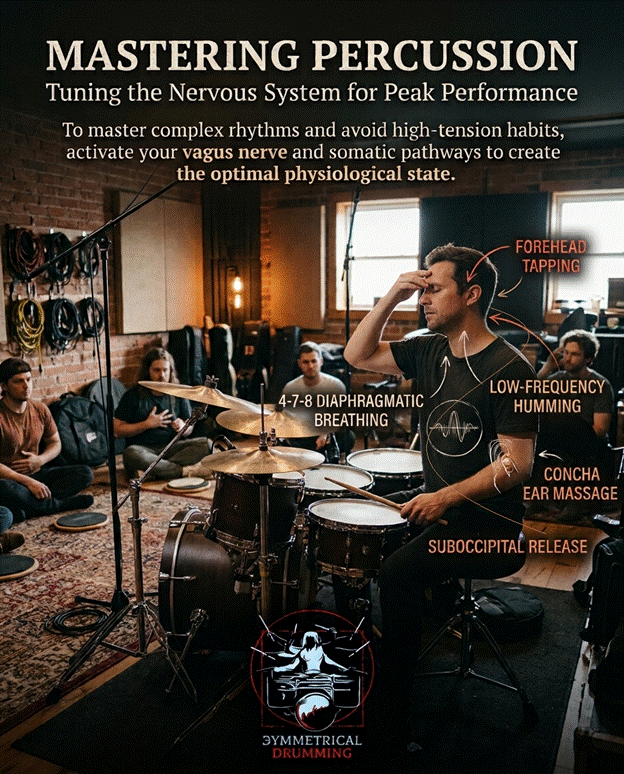
Below is an exploration of how these relaxation protocols directly benefit the core pillars of rhythmic execution.
1. Precise Timing and Groove Maintenance
Maintaining an unwavering pocket and consistent micro-timing relies entirely on neuromuscular micro-adjustments. When a drummer experiences stress or physical tension, adrenaline triggers sympathetic activation, resulting in elevated heart rate, restricted breathing, and micro-contractions in antagonist muscle groups (such as forearms and shoulders).
- Eradicating Micro-Spasms: Techniques like suboccipital release and 4-7-8 diaphragmatic breathing down-regulate the sympathetic nervous system, releasing unnecessary muscular tension in the upper body. This ensures that rebound mechanics and stick heights remain fluid and uniform.
- Internal Clock Stability: Autonomic nervous system regulation prevents micro-accelerations caused by performance anxiety. By lowering baseline physical tension, the body maintains a steady, relaxed pulse, allowing for effortless groove maintenance across complex polyrhythms and metric modulations.
2. Learning, Retention, and Myelination
Motor skill acquisition is fundamentally a physiological process of cellular adaptation. When learning intricate patterns, the brain builds and reinforces neural pathways through myelination-the wrapping of nerve fibres in a fatty sheath that speeds up electrical impulse transmission. However, stress hormones like cortisol inhibit neuroplasticity and hinder long-term potentiation (LTP).
- Optimizing Neuroplasticity: Engaging in parasympathetic reset techniques before practice lowers cortisol and floods the brain with an optimal biochemical environment for structural learning.
- Consolidating Motor Memory: A relaxed nervous system allows for higher cognitive bandwidth during practice blocks (such as a structured 50/10 Pomodoro routine), ensuring that physical repetitions are encoded accurately into procedural memory rather than reinforcing tense, compensatory habits.
3. Concentration, Focus, and Flow
Achieving the psychological state of "flow" requires a delicate balance of high challenge and low cognitive friction. Mental clutter, distractions, and performance dread prevent the brain from entering the synchronized alpha and theta wave states characteristic of deep immersion.
- Clearing Cognitive Noise: Methods like low-frequency humming, concha ear massage, and forehead tapping stimulate cranial nerves and anchor somatic awareness in the present moment. This sensory grounding quiets the default mode network (the brain region responsible for self-referential worry and overthinking).
- Sustaining Attention: By clearing sensory static and stabilizing autonomic arousal, these protocols allow the drummer to lock onto temporal subdivisions and dynamic nuances without mental fatigue, unlocking effortless, hyper-focused flow states during extended sessions.
Vagus Nerve Regulation & Somatic Activation Practices
1. Thumb Breathing (Modified Valsalva Manoeuvre)
-
Placing your thumb in your mouth, creating a tight seal with your lips, and attempting to exhale forcefully against it. This transient increase in airway pressure stimulates the vagus nerve, rapidly lowering heart rate and soothing acute stress.
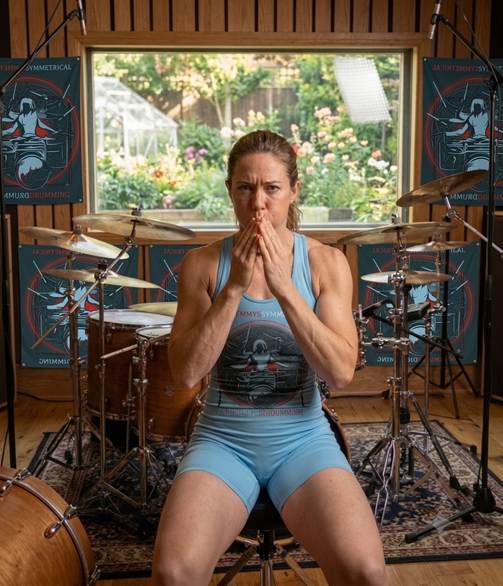
Scientific Reference: Grounded in clinical autonomic nervous system research on vagal stimulation via the Modified Valsalva Maneuver Research.
2. Forehead Tapping
- Gently tapping specific acupressure points on the forehead (such as the third-eye area) to send calming neural signals to the amygdala and down-regulate the sympathetic nervous system.
- Scientific Reference: Documented in clinical studies evaluating physiological stress reductions in EFT & Acupoint Tapping Research.

3. Collarbone Tap & Pressure
- Tapping or applying firm pressure just below the collarbones near the sternum. This stimulates the vagus nerve branches running near the upper thoracic region and helps release upper-body physical bracing.
- Scientific Reference: Explored in somatic protocols and non-pharmacological interventions for stress relief in Somatic & Acupoint Efficacy Studies.
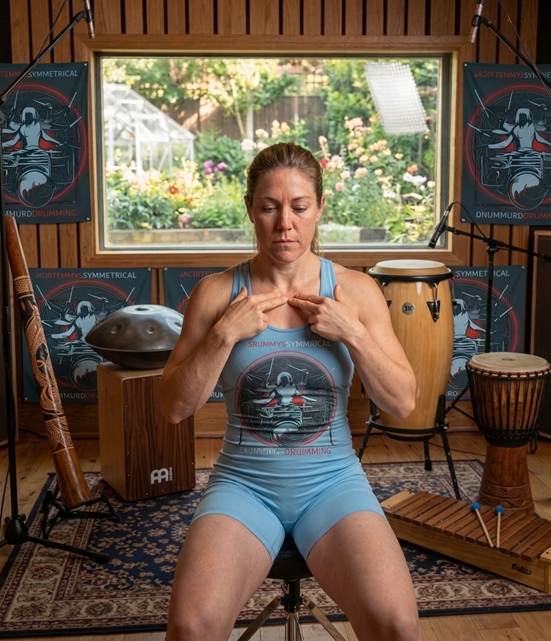
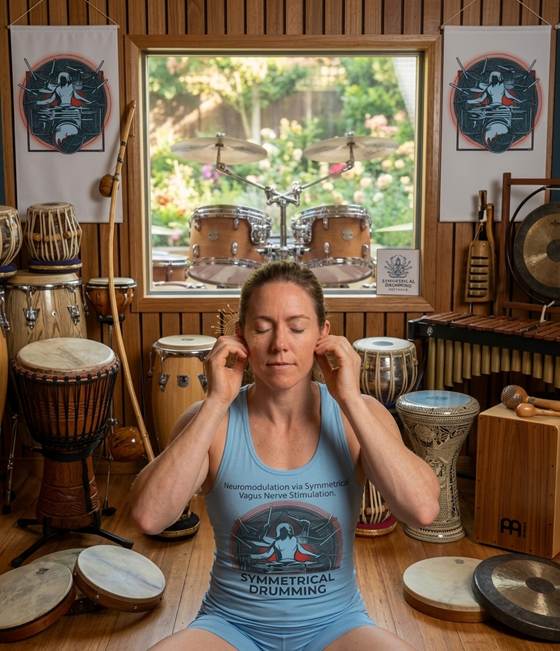
4. Pinna (Outer Ear) Massage and Tragus Pulls
- Massaging the outer ear (pinna) and gently pulling or pressing the tragus. The auricular branch of the vagus nerve (Arnold's nerve) supplies sensation to the external ear, making manual stimulation an effective non-invasive neuromodulation technique.
- Scientific Reference: Backed by extensive medical literature on non-invasive autonomic regulation in Transcutaneous Auricular Vagus Nerve Stimulation (taVNS) Research.
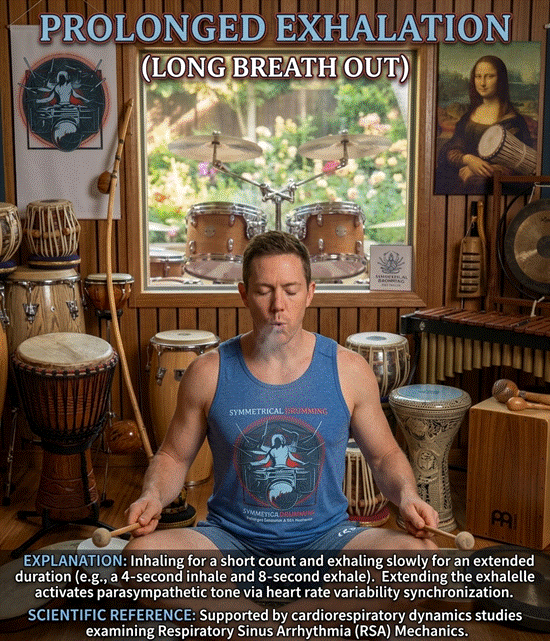
5. Prolonged Exhalation (Long Breath Out)
- Inhaling for a short count and exhaling slowly for an extended duration (e.g., a 4-second inhale and 8-second exhale). Extending the exhale activates parasympathetic tone via heart rate variability synchronization.
- Scientific Reference: Supported by cardiorespiratory dynamics studies examining Respiratory Sinus Arrhythmia (RSA) Mechanics.
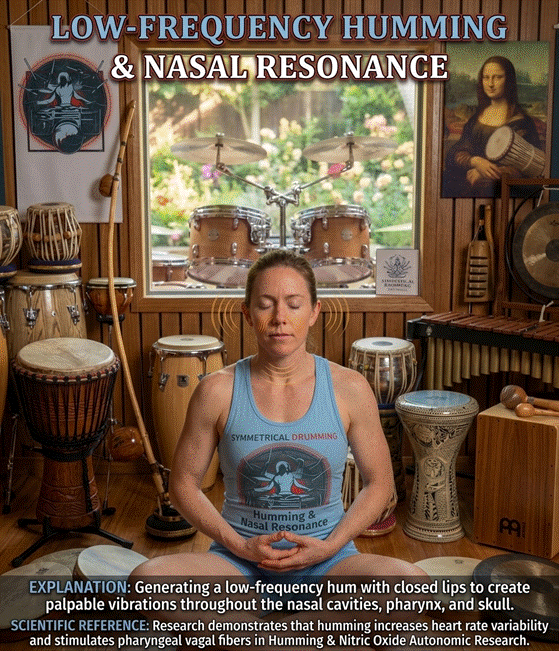
6. Low-Frequency Humming & Nasal Resonance
- Generating a low-frequency hum with closed lips to create palpable vibrations throughout the nasal cavities, pharynx, and skull.
- Scientific Reference: Research demonstrates that humming increases heart rate variability and stimulates pharyngeal vagal fibers in Humming & Nitric Oxide Autonomic Research.
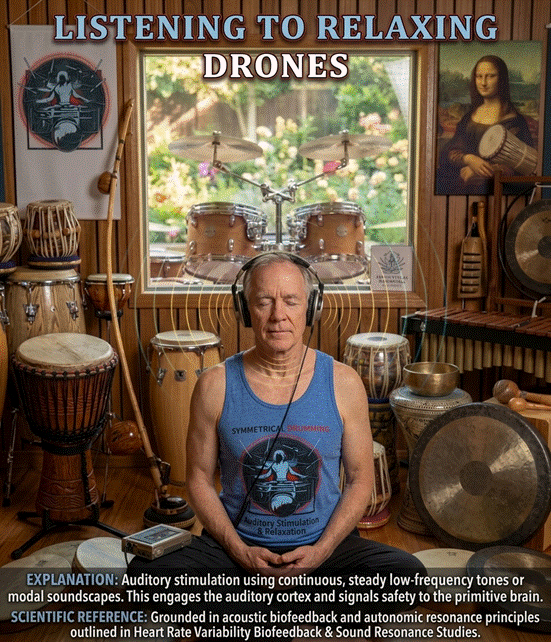
7. Listening to Relaxing Drones
- Auditory stimulation using continuous, steady low-frequency tones or modal soundscapes. This engages the auditory cortex and signals safety to the primitive brain.
- Scientific Reference: Grounded in acoustic biofeedback and autonomic resonance principles outlined in Heart Rate Variability Biofeedback & Sound Resonance Studies.
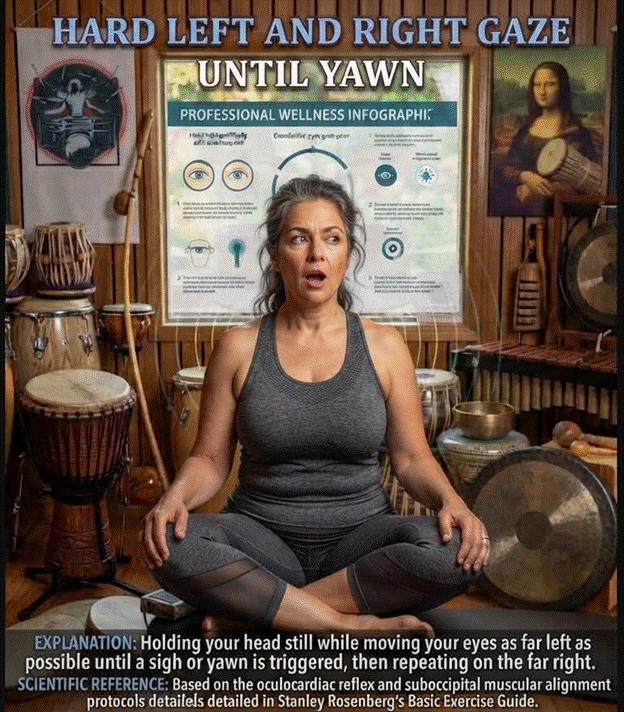
8. Hard Left and Right Gaze Until Yawn
- Holding your head still while moving your eyes as far left as possible until a sigh or yawn is triggered, then repeating on the far right.
- Scientific Reference: Based on the oculocardiac reflex and suboccipital muscular alignment protocols detailed in Stanley Rosenberg's Basic Exercise Guide.
About the Author
Mark Campbell is a Canberra-based percussionist, educator, and digital course creator with over 45 years of professional experience across drum kit, global percussion, handpan, bodhrán, and didgeridoo. Operating under Symmetrical Drumming Global, he specializes in ergonomic, ambidextrous kit designs and asynchronous instructional frameworks that bridge somatic relaxation with high-performance drumming mechanics.
- ABN: 62 493 559 628
- CRN: 204363750B | JSID: 4753322003
- Contact: markcampbelldrummer@gmail.com
- Platforms: Explore instructional breakdowns and original rhythmic compositions on the Symmetrical Drumming Australia YouTube channel or visit Symmetrical Drumming Australia.