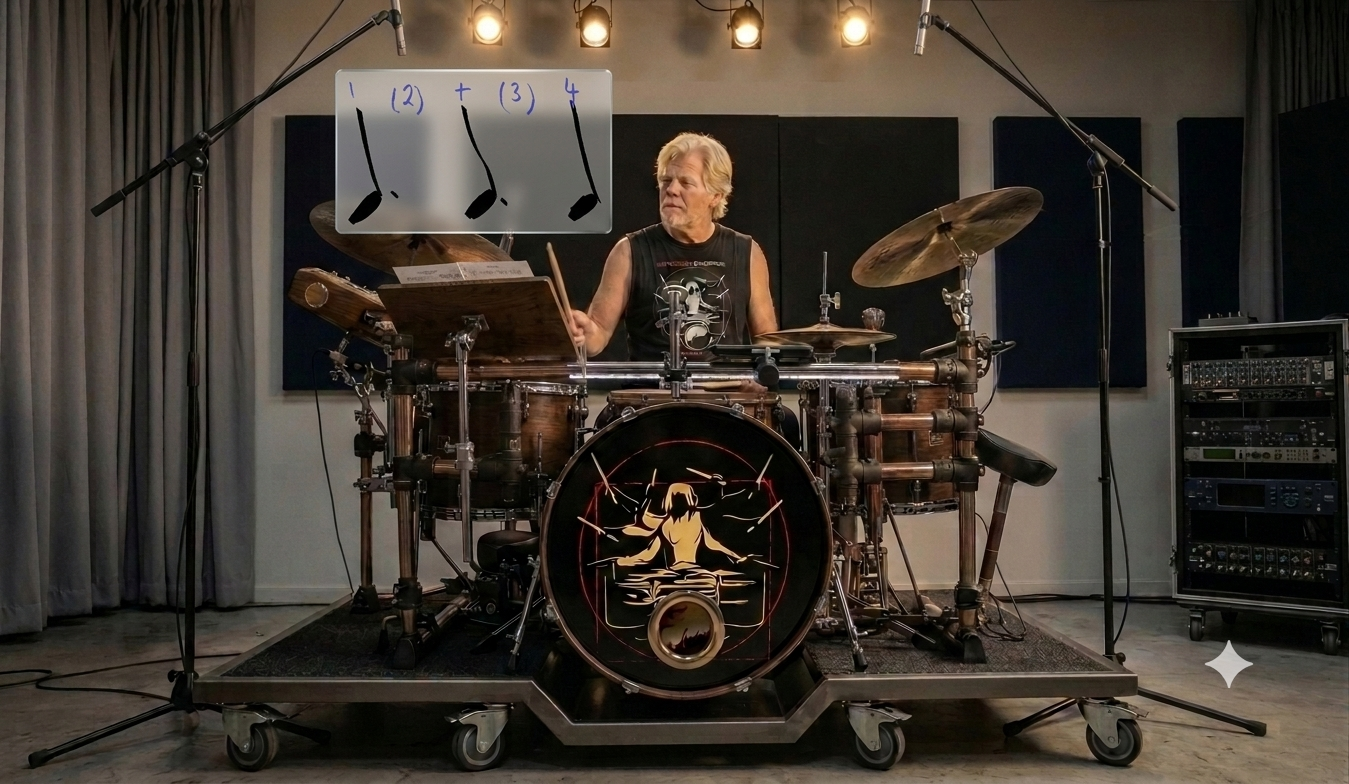
Beyond the Reps:
Why True Groove Demands Mindful Conscious Purpose
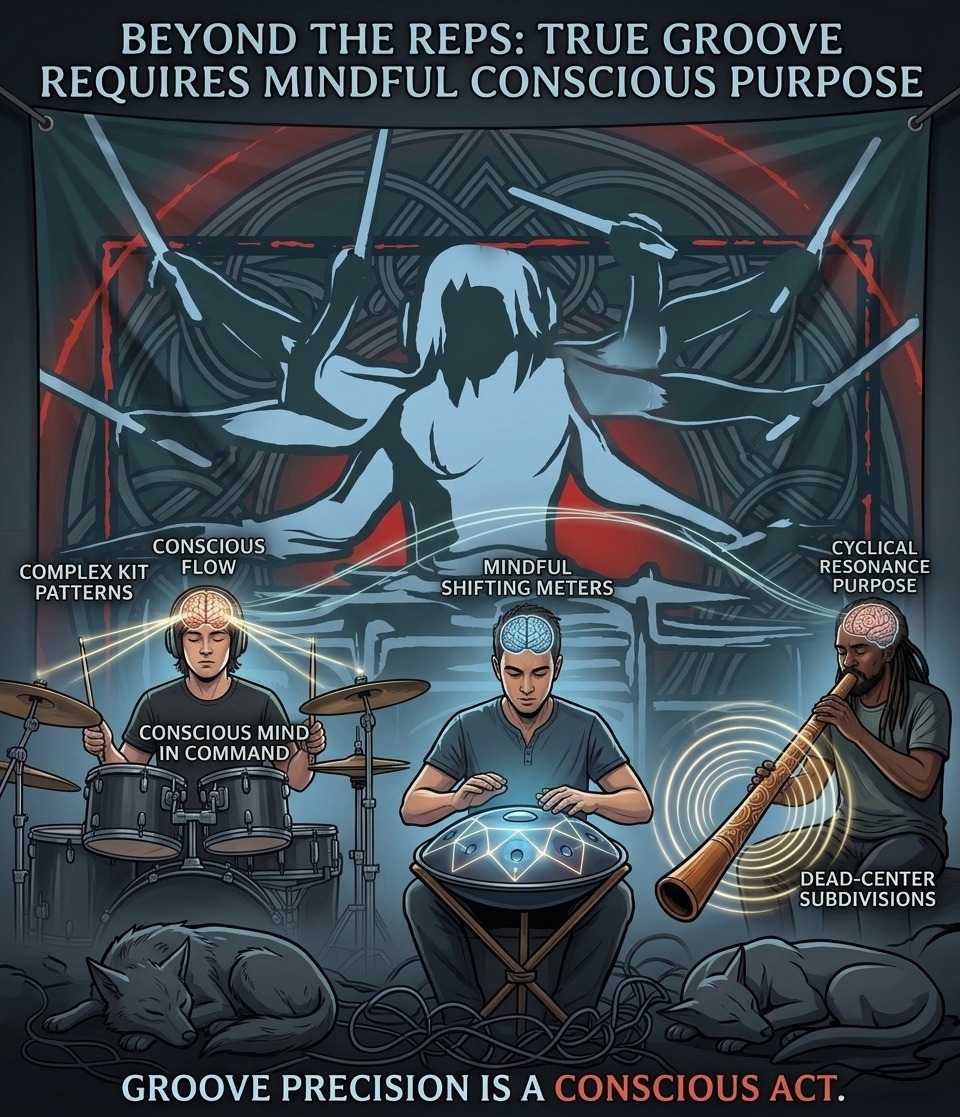
Whether you are locking down a complex kit pattern on the drums, driving the shifting meters of a frame drum or handpan, or maintaining the relentless cyclical resonance of a didgeridoo, one truth underpins every legendary performance: Groove precision is a conscious act.
True flow—that elevated state where time seems to expand and every subdivision sits dead center—is not born from mindless automation. It is the direct result of your conscious mind leading the way, putting your unconscious, short-cutting, "fight-or-flight" driven survival habits to absolute rest.
Dismantling the Protestant Myth of "Discipline"
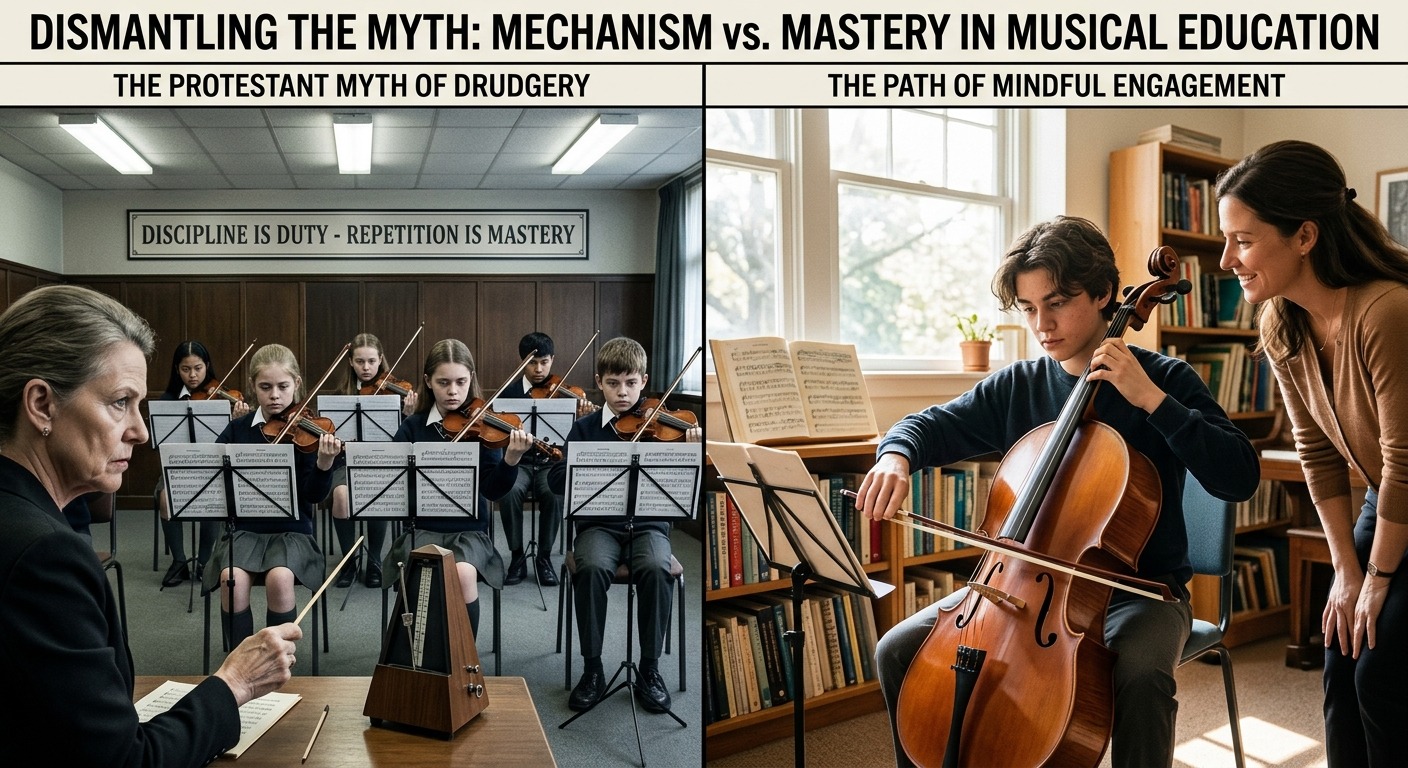
For generations, musical education has been poisoned by an unscientific, puritanical dogma: the idea of "discipline" as endless, grinding repetition where you suffer through hours of mechanical drudgery just so you "don't forget." You are told to grit your teeth, put in the reps, and hate every minute of practice because pain equals progress.\
This is not pedagogy; it is psychological conditioning.
When you practice while disconnected, bored, or stressed, you aren't building mastery—you are baking-in mechanical errors and tension directly into your nervous system. Rote repetition without conscious, mindful purpose simply reinforces the brain's default stress pathways. When the pressure mounts on stage, those habits of mind and unexamined shortcuts combine to fail you.
The 200% Fallacy: Confronting the "Live Loss" Mystery
I unfortunately learned this old-school mindset firsthand from my great drum teacher, Jon Collins, a jazz drummer extraordinaire of immense skill. Jon used to give me a piece of advice that defined his entire era of instruction:
"Practice to where your capacity is 200% of what is required, because when playing live, a musician loses half their 'chops' due to performance pressures."
It was a brilliant observation of a very real symptom, but it came with a glaring limitation: Jon never once questioned why this 50% reduction happened, nor did he look for a solution. He accepted performance anxiety and skill degradation as an inevitable tax on playing live music.
My philosophy stands in direct opposition to that resignation.
If a pattern, a lick, a chop, or an entire piece can be played successfully during practice at home, it can be played that way live as well. We cannot simply shrug our shoulders at a 50% loss of skill under pressure. We have to be scientists in the practice room—figuring out the neuroscience, locating the exact cause within the brain, and systematically dismantling that live degradation.
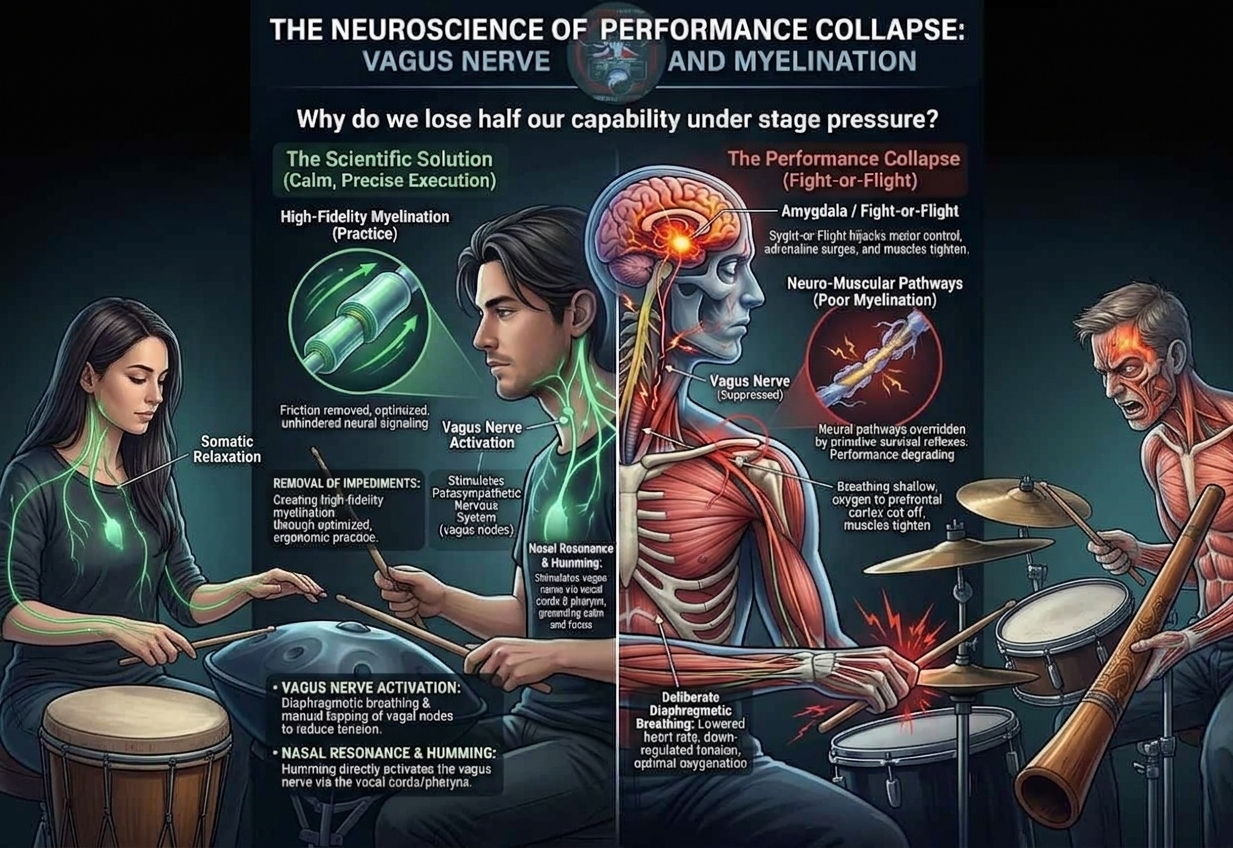
The Neuroscience of Performance Collapse: Vagus Nerve and Myelination
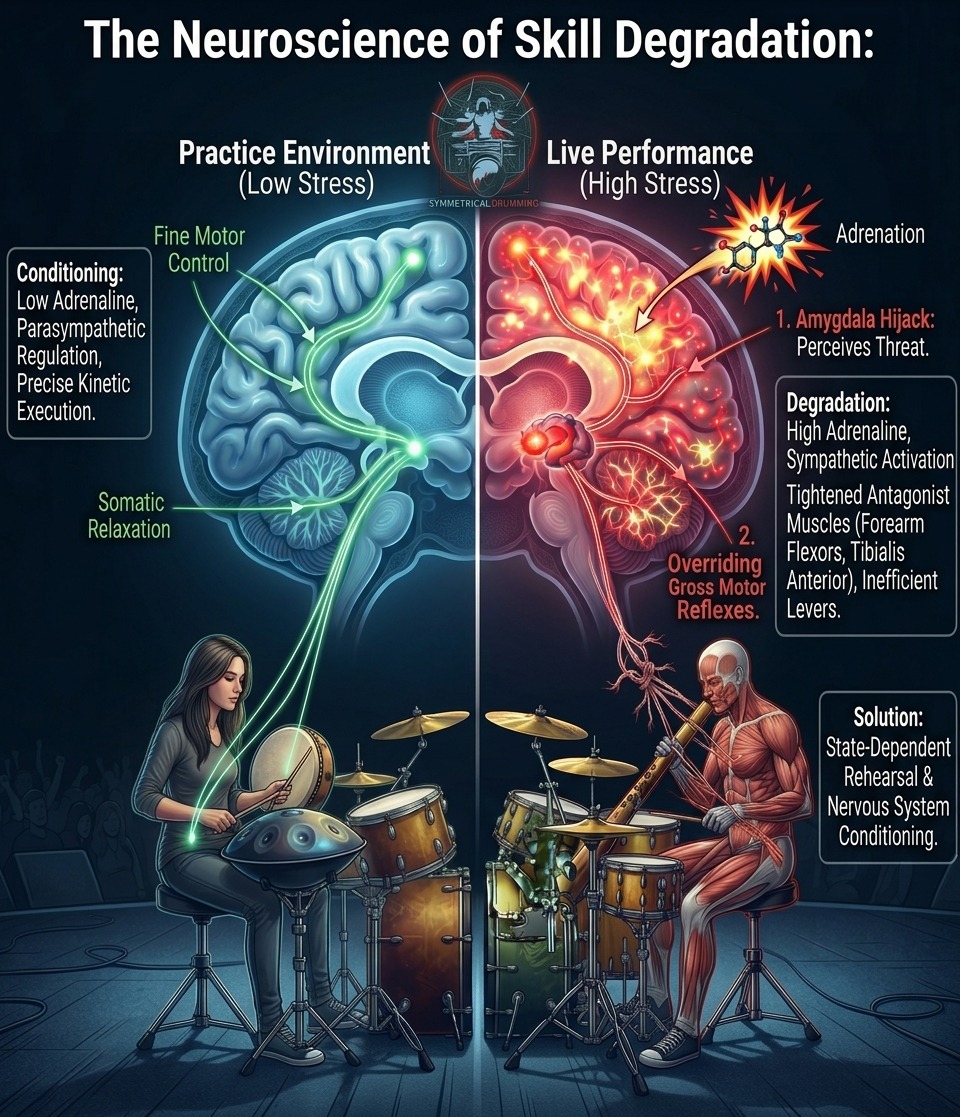
Why do we drop half our capability the moment the stage lights hit? Because the sympathetic nervous system—our ancient fight-or-flight survival mechanism—hijacks our motor control. Adrenaline surges, muscles tighten, breathing shallowly cuts off oxygen to the prefrontal cortex, and our finely tuned neural pathways get overridden by primitive survival reflexes.
To solve this, we must turn to science-based techniques rooted in measurement, observation, documentation, replication, and peer review:
- Removal of Practice Impediments: Clean, efficient neuro-muscular pathways require the removal of physical, mental, and environmental friction. When your practice space is optimized, uninterrupted, and ergonomically sound, high-fidelity myelination—the wrapping of neural fibers in myelin sheaths to speed up signal transmission—can occur cleanly without interference.
- Vagus Nerve Activation: To stop the fight-or-flight response from robbing your chops, you must actively stimulate the parasympathetic nervous system. We utilize deliberate diaphragmatic breathing, targeted physical relaxation, and manual tapping of vagal nodes to down-regulate heart rate and muscle tension in real-time.
- Nasal Resonance & Humming: Sound is vibration, and vibration is neurology. Stimulating the cranial and nasal resonances through intentional humming directly activates the vagus nerve via the vagal innervation of the vocal cords and pharynx, creating an immediate physiological anchor of calm and centered focus right before you play.
The Ultimate Efficiency Multiplier: Recreating the Mastered Mindset
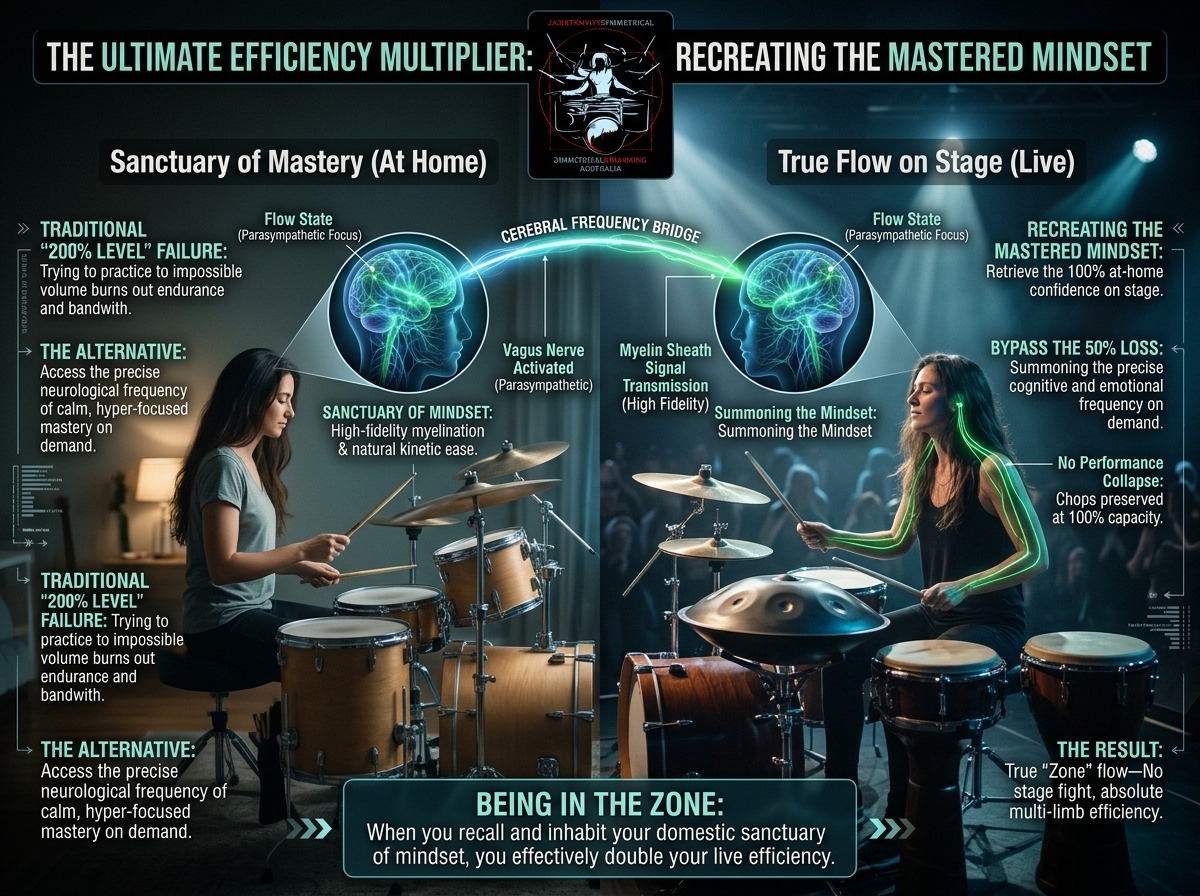
Practicing to a proposed, subjective "200% level" is not only impossible to quantify; it is doubly inefficient. Chasing an arbitrary volume of extra work burns out your physical endurance and mental bandwidth.
Instead, I propose a far more powerful, scientifically sound alternative: Recreating the exact state of mind you had when you successfully and reliably mastered a piece at home.
Mastery isn't just about muscle memory in your wrists or feet; it is a neurological state of calm, hyper-focused awareness. The moment you step onto a stage, your primary technical challenge is not executing the notes—it is consciously recalling and inhabiting that exact domestic sanctuary of mindset.
When you learn how to summon that precise cognitive and emotional frequency on demand, you stop fighting your instrument, you bypass the 50% live loss trap, and you effectively double your efficiency as a musician. That is being in the zone. That is true flow.
About the Author
Mark Campbell is the founder and principal instructor of Symmetrical Drumming Global, bringing over 45 years of practical drumming, multi-percussion performance, and instructional experience to musicians worldwide. As an innovator in ambidextrous kit methodology, custom hardware design, and science-based somatic training, Mark is the author of Symmetrical Drumming & Hybrid Multi-Percussion: A Beginner's Foundation and an active researcher in the neuroscience of groove, rhythm, and peak performance.