What do the ‘Innerds’ of my HiHat look like?
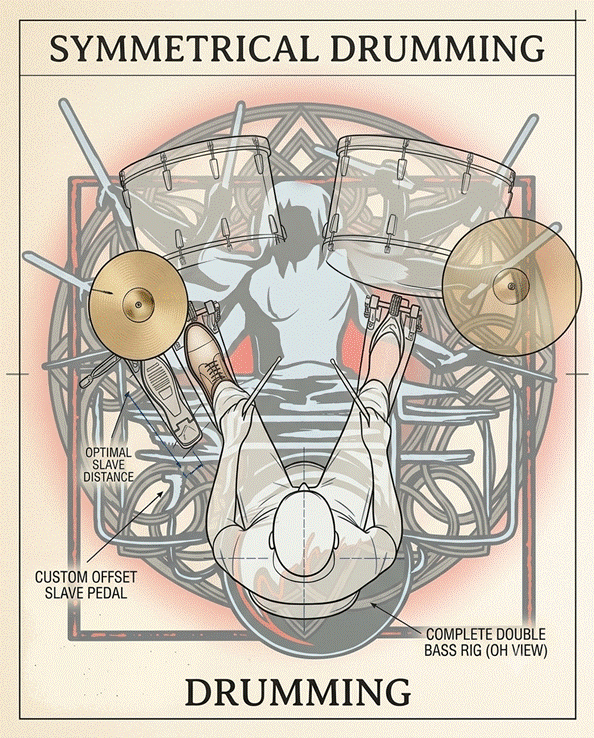
To most Drummers and Percussionists, the inner workings of the HiHat is a black box
Every drummer knows the feeling: you spend hours fine-tuning snare tension, swapping out bass drum heads, or hunting down hand-hammered cymbals. Yet sitting right under your left foot is the single most complex, hard-working piece of engineering on the entire rig—the hi-hat stand.
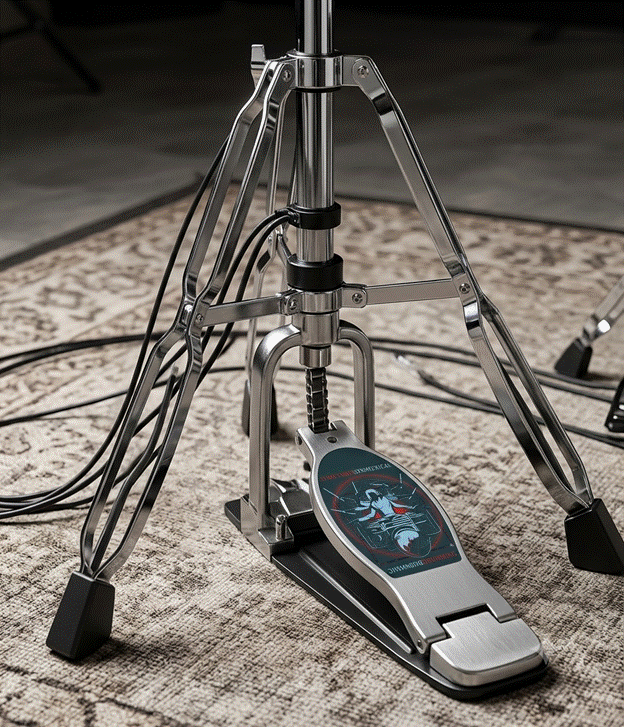
If you’ve ever looked at a modern hi-hat stand and felt cross-eyed by the array of tension collars, direct-pull chains, and eccentric cams, take heart. You don’t need a mechanical engineering degree to unseal this "black box." Understanding its mechanics can completely unlock your ergonomics, your balance, and your groove.
Part 1: From "Low Boy" to High Art – A 100-Year Revolution
Before the hi-hat existed, early 20th-century "trap" drummers played what was essentially a collection of loose instruments: a bass drum, a snare, a couple of hanging cymbals, and a handful of hand instruments ("trappings").
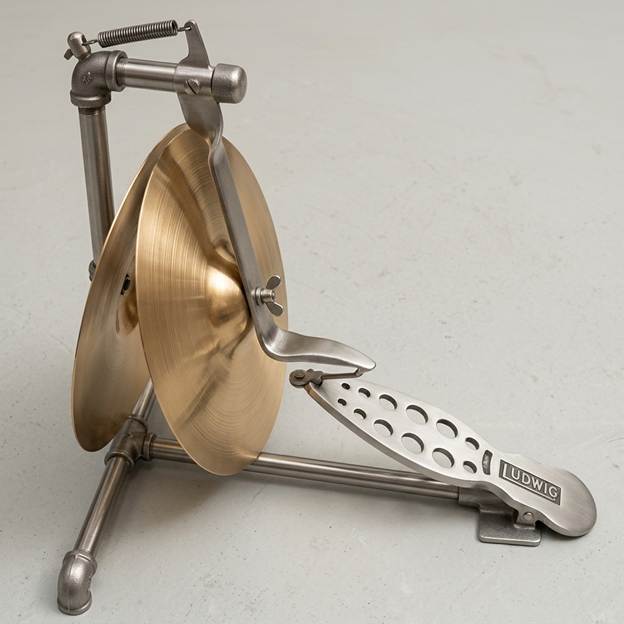
Around the 1920s, hardware pioneer Barney Walberg designed a floor-level pedal setup called the Snowshoe Arrester, which quickly evolved into the Low Boy (or "sock cymbal"). Mounted barely 12 inches off the ground, these early spring-loaded floor units housed small, heavy cymbals designed strictly for foot-stamped backbeats.
Then came the flash of brilliance: extending the central pull rod upward so the cymbals sat at chest height.
The birth of the "hi-hat" changed music forever. For the first time, a drummer could play the cymbals simultaneously with sticks and feet. It transformed the trap set into a unified, four-limb instrument—giving rise to modern swing, bebop, rock, and every groove format that followed. The hi-hat didn't just join the drum set; it defined the very concept of the kit.
What’s Next: Now that we’ve seen how the hi-hat created the modern drum kit, let’s peek inside the black box to see how different spring systems translate your foot pressure into dynamic cymbal control.
Part 2: Under the Hood – Comparative Analysis of Hi-Hat Spring Mechanics & Drive Types
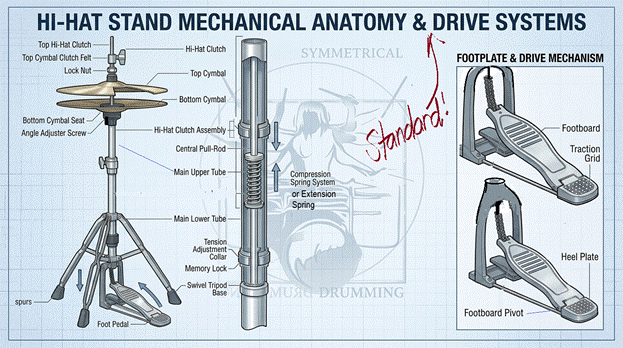
Stripped to its core, a hi-hat stand is a vertical elevator system powered by a spring and controlled by your foot. How that force gets transferred shapes your control, feel, and physical fatigue behind the kit.
| System Type |
Representative Models / Mechanism |
Cost & Simplicity |
Adjustability & Weight |
Force Response Profile |
|---|---|---|---|---|
| Traditional Direct-Pull (Compression) |
Standard vintage and entry-level stands (e.g., Ludwig, Yamaha standard) |
Low Cost / High Simplicity (Few moving parts) |
Low to Moderate (Basic tension collar); Light Weight |
Non-Linear (Progressive): Spring resistance increases sharply as the pedal is depressed and the spring coils compress. |
| Direct-Pull (Extension / Legacy) |
Pearl double-extension spring legacy designs |
Low Cost / Moderate Simplicity |
Moderate Adjustability; Moderate Weight |
Non-Linear: Tension builds steadily through the stroke, offering a snappy top-end release. |
| Chain Drive & Cam Systems |
Pearl Eliminator Redline, Gibraltar heavy-duty series |
High Cost / Low Simplicity (Cams, chains, multi-joint linkage) |
High Adjustability (Interchangeable cams, infinite tension dials); Heavy Weight |
Tunable (Linear or Progressive): Eccentric cams alter the leverage ratio throughout the pedal stroke. |
| Cable / Remote Hi-Hats |
DW 5500TL, Tama HH905N (Iron Cobra Cobra-Clutch / Remote) |
Very High Cost / Very Complex (Bowed cable housing, internal slide wires) |
Low to Moderate Adjustability (Cable friction limits fine-tuning); Heavy Weight |
Non-Linear (Damped / Lagged): Cable friction and housing bend introduce mechanical hysteresis and a softer, slightly spongy return. |
| Custom Symmetrical Design |
Symmetrical Drumming Australia Z Link / Offset System |
Custom Build / Moderate Complexity (Pulleys, custom linkages) |
Extreme Adjustability (Internal coaxial spring, floating ergonomics); Ultra-Light Weight |
Linear to Tunable: Coaxial spring geometry paired with a short mechanical path yields zero hysteresis. |
Engineering Parameters Evaluated:
-
Cost: Compression and extension systems are economical to manufacture. Chain drives and remote cable mechanisms introduce manufacturing overhead via high-tolerance cams, sealed bearings, and armored Bowden cables.
-
Simplicity & Reliability: The fewer pivot points and linkages a system has, the lower its mechanical failure rate. Traditional direct-pull designs win on field reliability, whereas cable systems introduce points of cable stretch, housing fatigue, and internal binding.
-
Adjustability: Modern players demand independent control over spring tension, footboard angle, and pull-rod height. Advanced chain drives and custom internal coaxial systems excel here, allowing precise dial-in of dynamic cymbal weight.
-
Weight: Heavy touring stands utilize thick steel baseplates and cast-iron frames to prevent walking. Ergonomic custom builds prioritize weight reduction through hollow-tubing shafts and aluminum alloy frames.
-
Linear vs. Non-Linear Response:
What’s Next: Modern drumming brings new mechanical hurdles—especially when introducing a second kick pedal. Next, we look at the double-kick dilemma and how custom engineering solves it.
Part 3: The Tricky Locational Double Kick Dilemma & Ergonomic Innovation
Integrating a double-bass pedal configuration forces a standard center-mounted hi-hat pedal out of optimal alignment, creating a tricky locational double kick conflict.
The standard industry solution places the hi-hat pedal on the outside of the secondary kick pedal. The hidden cost? It pushes your hi-hat cymbals further away from the snare drum, forcing cross-handed players into an awkward reach, creating an ergonomic nightmare, and unconsciously reducing the "centrality" of the hi-hat to the overall groove.
Innovators like Claus Hessler (cousin of Rush drummer Anika Nilles) solved this by placing his hi-hat pedal inside the secondary kick pedal while playing open-handed. While Hessler’s approach brings the hi-hat cymbals closer to the snare, it introduces a separate hardware compromise: it requires an extended drive shaft on the slave kick pedal, increasing mechanical lag, universal joint play, and dynamic loss on the left foot.
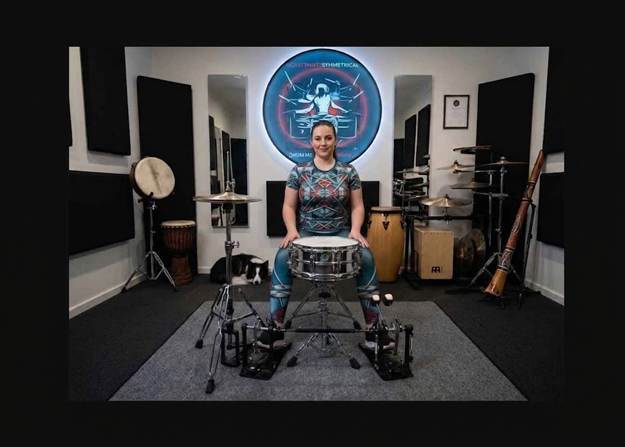
Solving Both Worlds: The Symmetrical Drumming Australia Z Link / Offset System
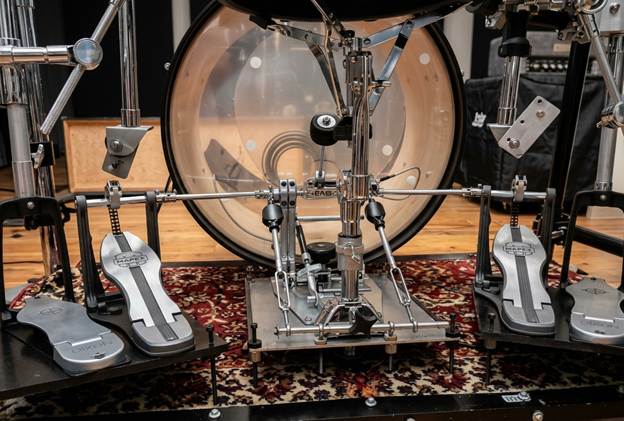
Designed with an eye toward the global market, the Symmetrical Drumming Australia Z Link / Offset System solves both spatial and mechanical challenges simultaneously:
-
Ergonomic Centrality Without Drive Shaft Extensions: The "Z Offset" drive decouples pedal placement from vertical pull-rod geometry. The physical cymbals sit right in the prime, natural striking zone next to the snare—restoring the hi-hat's visual and physical centrality—without requiring an overly long double kick drive shaft.
-
Optimal Footprint & Clearance: The offset footboard maintains natural foot positioning alongside the secondary kick pedal, eliminating the awkward crossover angle for traditional play and providing a seamless foundation for open-handed execution.
-
Short-Throw Mechanical Drive: Utilizing precision ball-bearing pulleys, ultra-short cables, and a lightweight hollow hi-hat rod, it preserves a direct 1:1 feel, zero hysteresis, and instantaneous response—avoiding sluggish remote cables.
-
Internal Adjustable Coaxial Spring Architecture: Isolates spring vibration, reducing physical weight for transport while keeping the setup whisper-quiet in studio environments.
What’s Next: Modern hi-hat engineering doesn't just serve metallic cymbals—it bridges directly into the ancient world of global percussion and pulse-keeping.
Part 4: World Percussion Cross-Over – Full Circle to Ancient Roots
While the metallic hi-hat stand itself is barely 100 years old, the groove function it fulfills is ancient. Within any modern rhythm, the open-and-closed "chick-tik" of the hi-hat is simply the mechanical evolution of millennia-old hand percussion instruments: the African shekere, Afro-Cuban maracas, cabasa, and native seed-pod shakers.
Before metal cymbals took over the kit's timekeeping role, these hand-held shaker instruments provided the continuous high-frequency subdivisional grid for ensemble music. Today, percussion design has come full circle—adapting those very world instruments to be played with the foot using hi-hat stand mechanics:
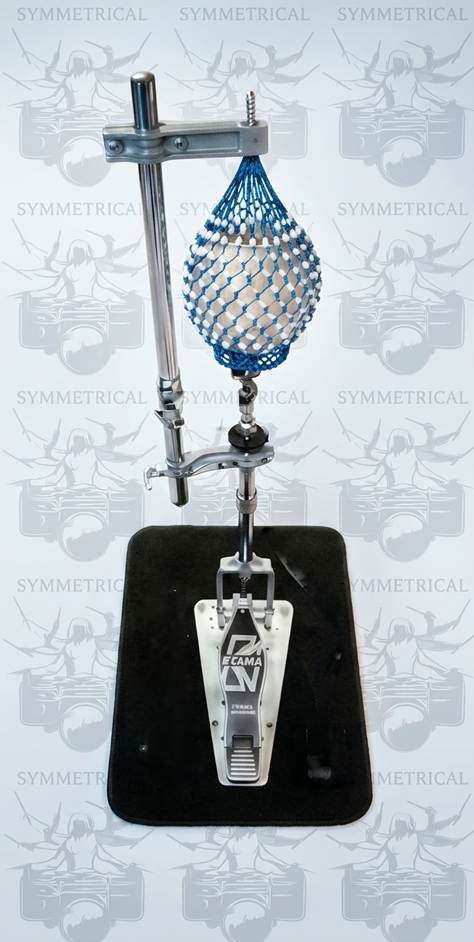
1. Commercial Foot Percussion Innovations
-
Meinl Foot Cabasa: Mounts a textured metal cylinder and bead chain directly to a pedal assembly. Operating much like a hi-hat pull mechanism, pressing your foot rotates the cylinder against the beads, giving you precise, hands-free cabasa patterns right in the groove.
-
LP Hi-Hat Shekere: Mounts a specially designed beaded gourd or synthetic shekere shell directly onto the pull rod of a standard hi-hat stand. Depressing the foot pedal slams or shakes the net of beads against the shell, delivering an authentic acoustic shekere accent on the quarter note or eighth-note pulse.
2. Custom Hybrid Builds: Symmetrical Drumming Australia "Shek-Hats"
At Symmetrical Drumming Australia, this cross-over concept moves into full hybrid territory with the custom-built Shek-Hat. Featured in the YouTube video "What on earth is Symmetrical Drumming?", the Shek-Hat replaces or augments standard bronze cymbals with custom-weighted shaker shells and net-tension assemblies mounted directly to the Z Link/Offset rod. This allows the player to trigger organic, acoustic world-percussion textures hands-free while maintaining a symmetrical physical stance over the kit.
3. Other Cross-Over World Instruments Played as Hi-Hats
-
Hi-Hat Mounted Tambourines & Jingles: The most common hybrid, mounting steel or brass jingle discs directly above the top cymbal clutch to layer bright jingle accentuation over standard hi-hat foot stomps.
-
Foot-Operated Castanets: Mounted to hi-hat rods or auxiliary pedal linkages to execute crisp, fast flamenco or Latin acoustic patterns using standard foot technique.
-
Hi-Hat Frame Agogô Bells & Shaker Pods: Utilizing auxiliary clamps on the upper hi-hat tube to allow dynamic stick-striking and foot-chicking of traditional West African bell tones without leaving the primary timekeeping position.
What’s Next: Beyond world percussion and hybrid setups, hardware builders continue to test experimental mechanical frontiers.
Part 5: Exploring Other Unique Hi-Hat Builds in Percussion Engineering
Cutting edge system.
Beyond standard commercial offerings and world percussion adapters, several innovative mechanical concepts have emerged from custom builders and experimental designers:
-
Magnetic Resistance Hi-Hats: Replaces traditional steel coil springs with opposing rare-earth neodymium magnets. As the pedal is depressed, the magnetic fields push against each other for a completely frictionless operation with zero spring fatigue.
The Takeaway
Your hi-hat is far more than a pair of cymbals on a stick—it’s a century-old masterpiece of mechanical design that ties your whole body to the groove, bridging modern drum set engineering with ancient world percussion dynamics.
Opening up the "black box" of your stand's mechanics (and choosing a setup that respects your body's natural symmetry) is the fastest route to effortless speed, precise dynamic control, and total freedom behind the kit.
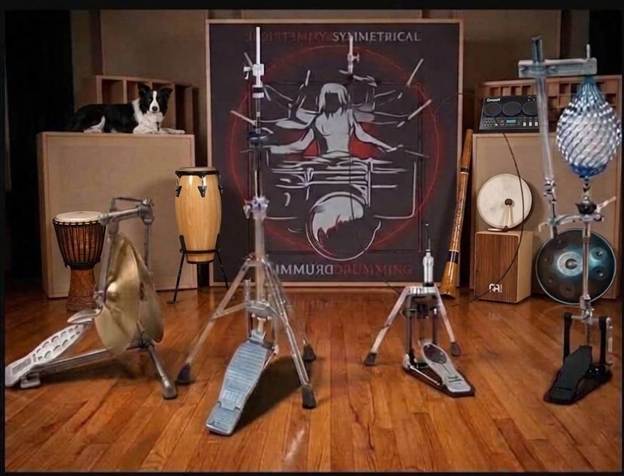
For a deeper dive into hybrid world percussion setups, check out our demonstration video "What on earth is Symmetrical Drumming?" on our YouTube channel, and explore custom hardware solutions on our website: