Beyond Old Stodgy Musicianship:
A Modern, Somatic Approach to Ear Training
Traditional conservatory ear training often feels like a dry, academic test—drilling isolated intervals on paper or identifying detached triads out of context. But real music does not happen in a vacuum. Modern ear training treats harmony as somatic, spatial, and functional, connecting visceral physical sensation directly to real-world musical application.
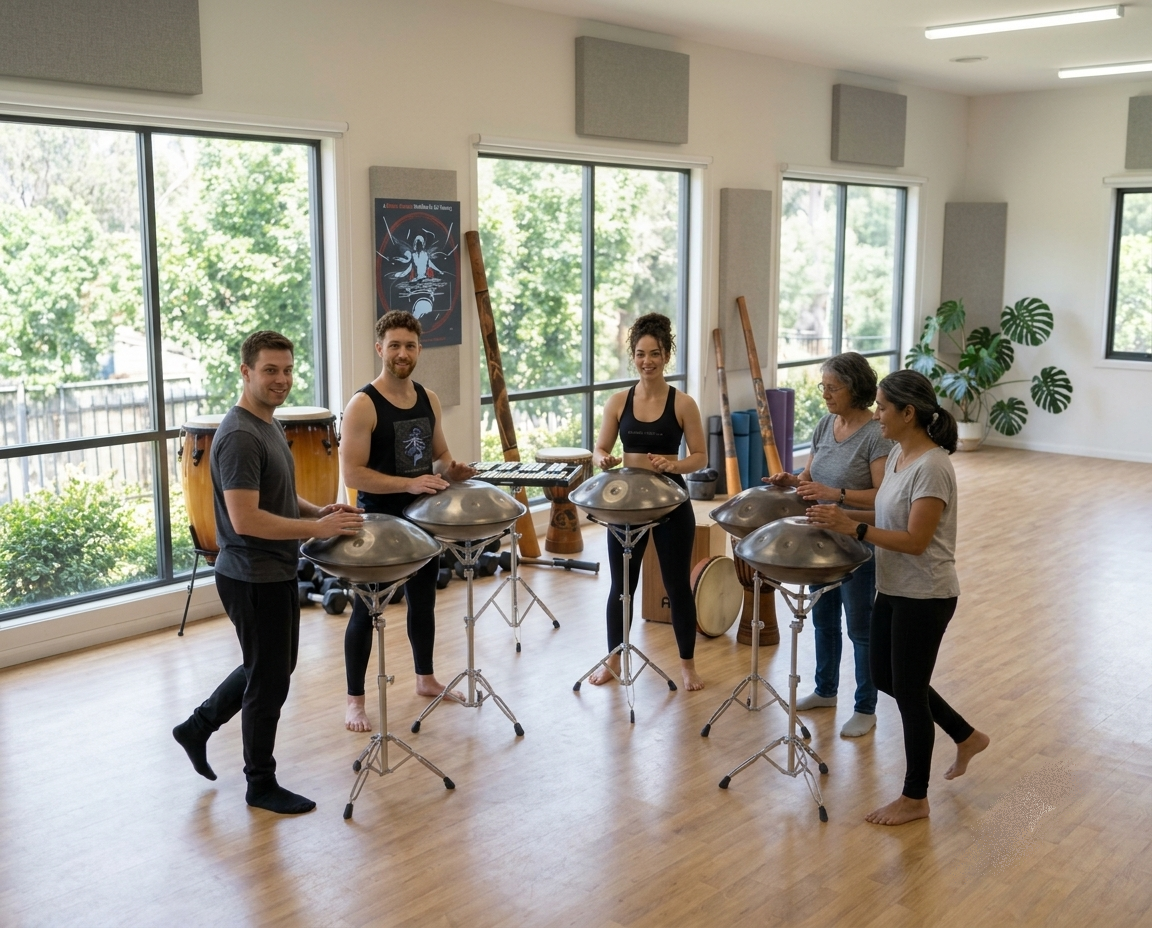
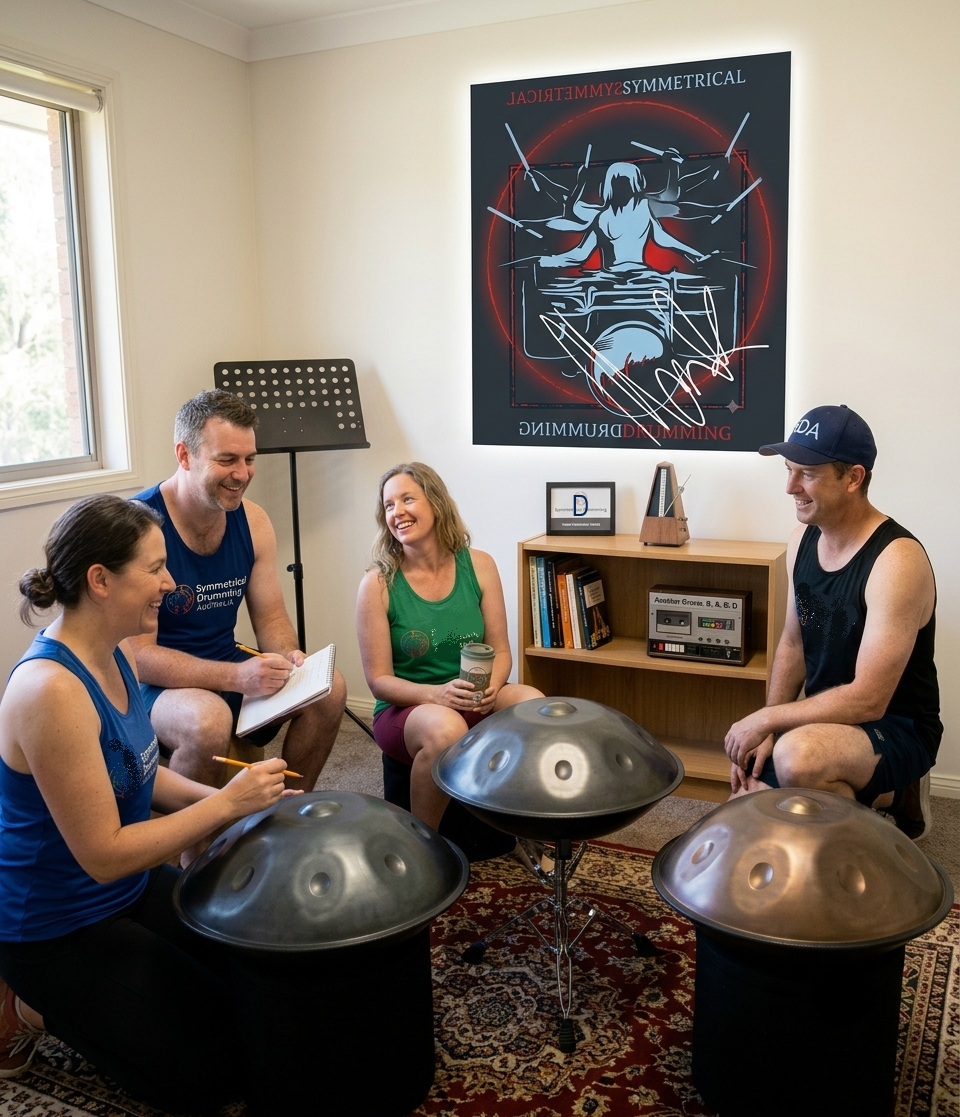
Whether you are navigating a keyboard, tuning into high-frequency metal percussion, or exploring the acoustic geometry of a handpan, here is how to build an intuitive, dynamic ear that works in real time.
The Core Framework:
From Sensation to Function
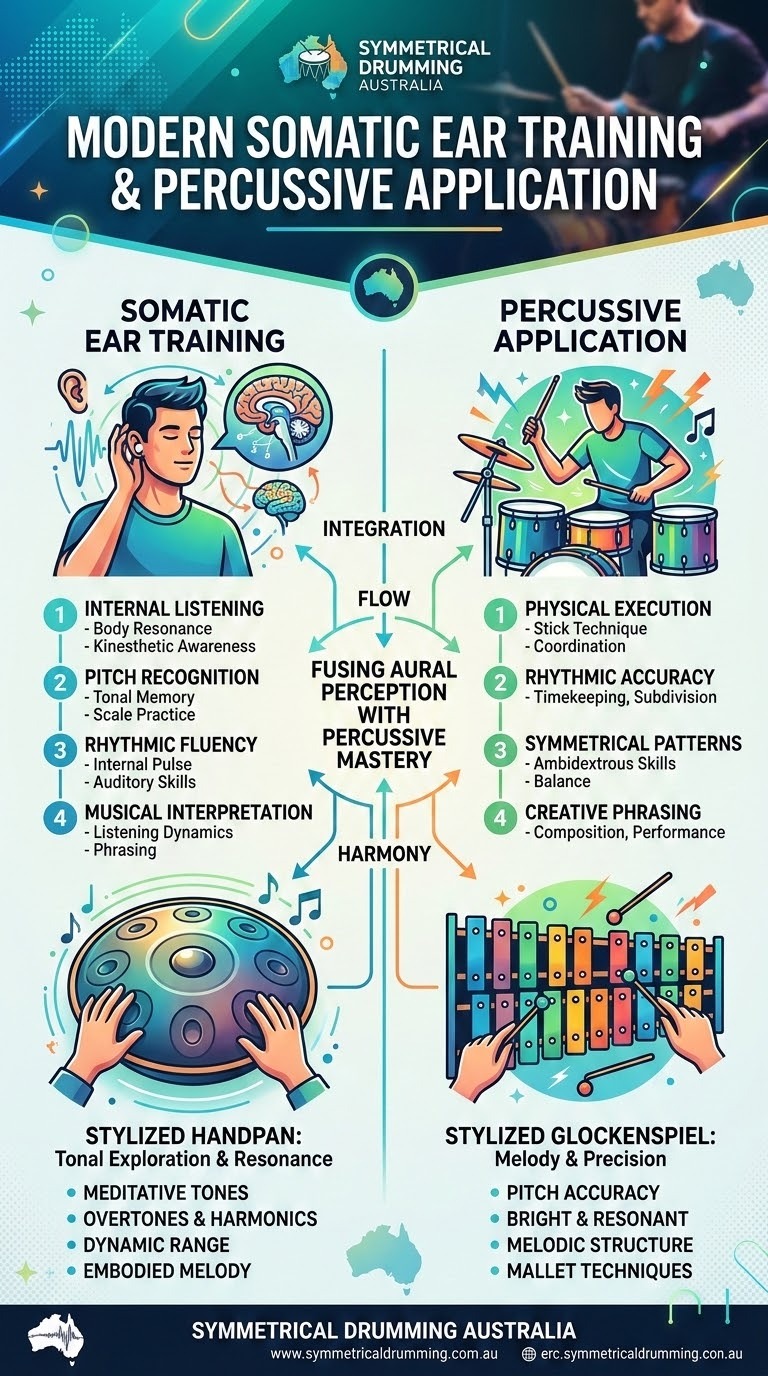
Instead of memorizing static formulas, modern ear training builds listening skills through progressive layers of sensation, gravity, and color.
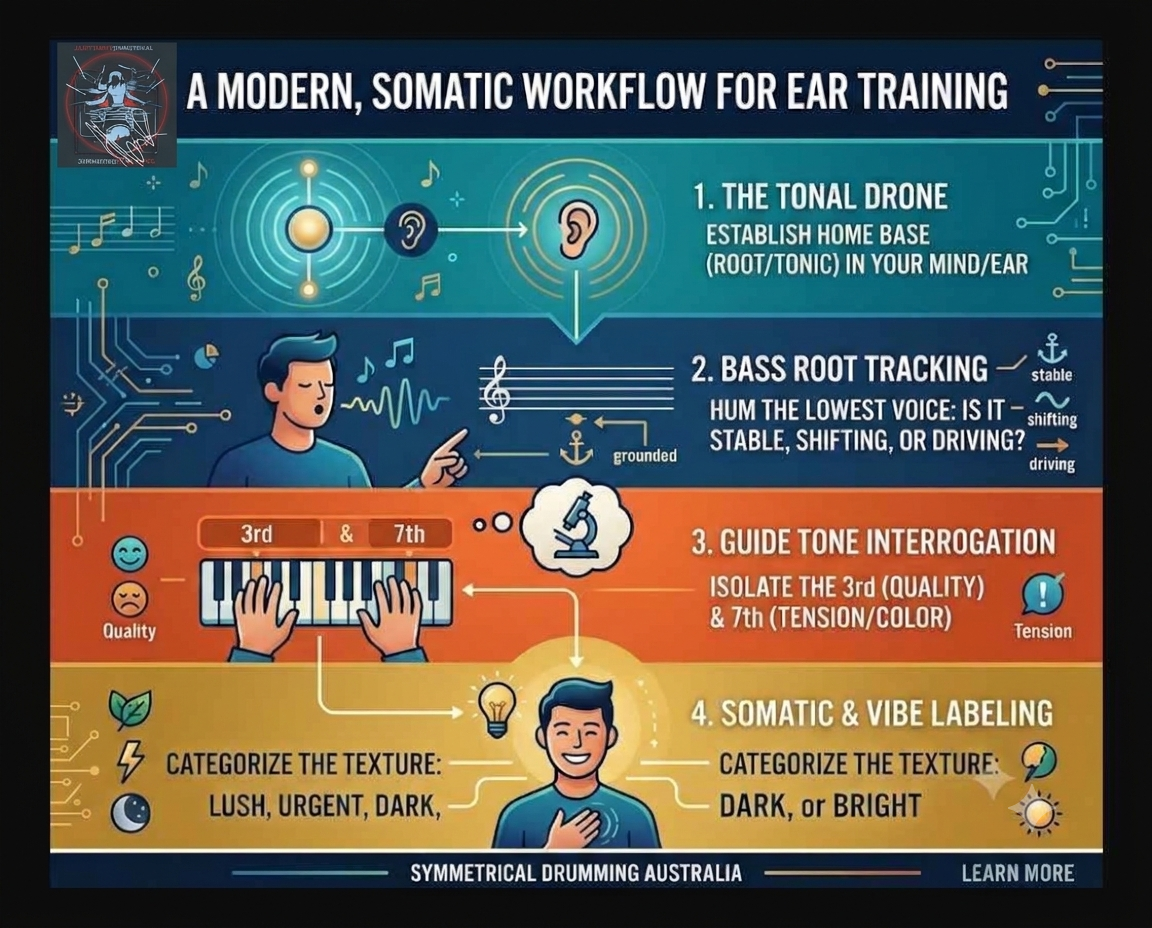
Stage |
Pillar |
Core Focus |
Perceptual Objective |
|---|---|---|---|
01 |
The Tonal Drone |
Root / Tonic Grounding |
Establish home base firmly in mind and ear |
02 |
Bass Root Tracking |
Functional Gravity |
Hum lowest voice: stable, shifting, or driving? |
03 |
Guide Tone Interrogation |
3rds and 7ths |
Isolate quality (3rd) and color/tension (7th) |
04 |
Somatic & Vibe Labeling |
Emotional Texture |
Map texture immediately: lush, urgent, dark, bright |
Phase 1:
Sound Quality & Sensation
Before naming notes or Roman numerals, map chords to their emotional texture and physical resonance:
- Major: Stable, bright, unified, resting.
- Minor: Dark, reflective, grounded, slightly heavier.
- Diminished: Squeezed, unstable, urgent tension pulling inward.
- Augmented: Floating, weightless, unresolved dreamscape.
Practical Exercise:
Play or listen to an isolated chord and speak its qualitative character out loud before naming its technical structure (e.g., "urgent and tight" versus "resting and wide").
Connecting physical feeling to sound builds an immediate, reliable neural shorthand.
Phase 2:
Functional Hearing (Tonal Gravity)
Hear harmony relative to an established tonal center to perceive where music rests and where it pulls:
- Sing the Bass Root First:
- The lowest voice establishes functional direction. Hum or vocalize the fundamental root of the chord before dissecting inner voice quality.
-
Track the Tension/Release Arc:
- Tonic (I, vi): Complete stability, grounding, and resolution.
- Pre-Dominant (IV, ii): Directional departure from home; mild open tension.
- Dominant (V, vii°): Active forward momentum pulling decisively toward home.
Phase 3:
Guide Tones & Modern Color
Once triad qualities become second nature, layer 7ths and harmonic extensions by zeroing in on the tetrad guide tones:
The 7th Defines Color and Tension: The seventh interval adds harmonic color and creates the forward momentum or "pull" that drives the chord progression forward (especially when resolving from a dominant 7th chord to a tonic chord).
Chord Type |
Harmonic Formula |
Somatic Profile & Context |
|---|---|---|
Major 7th |
Major triad + Major 7th |
Soft, lush, nostalgic; staple of neo-soul and modern jazz |
Dominant 7th |
Major triad + Minor 7th |
Gritty, bluesy forward pull; drives harmonic cadence |
Minor 7th |
Minor triad + Minor 7th |
Smooth, mellow, relaxed, nocturnal resonance |
Half-Diminished (m7b5) |
Diminished triad + Minor 7th |
Dark suspense, cinematic tension; minor-key pre-dominant
|
2. Percussive Application: Handpan & Glockenspiel
Applying functional chord identification to tuned metal percussion connects auditory processing with physical spatial awareness, mallet mechanics, and shell layout.
Dimension |
Handpan Mechanics |
Glockenspiel Mechanics |
|---|---|---|
Tonal Resonance |
Central Ding creates an unbroken modal drone |
High steel bar impact with crystalline decay |
Spatial Mapping |
Zig-zag alternation across hemispherical tone fields |
Dual-tier keyboard layout (naturals vs. accidentals) |
Harmonic Focus |
Dyad blooming and overtone clusters across shells |
Fundamental isolation and damping bright upper partials |
Handpan: Intuitive Harmony & Spatial Geometry
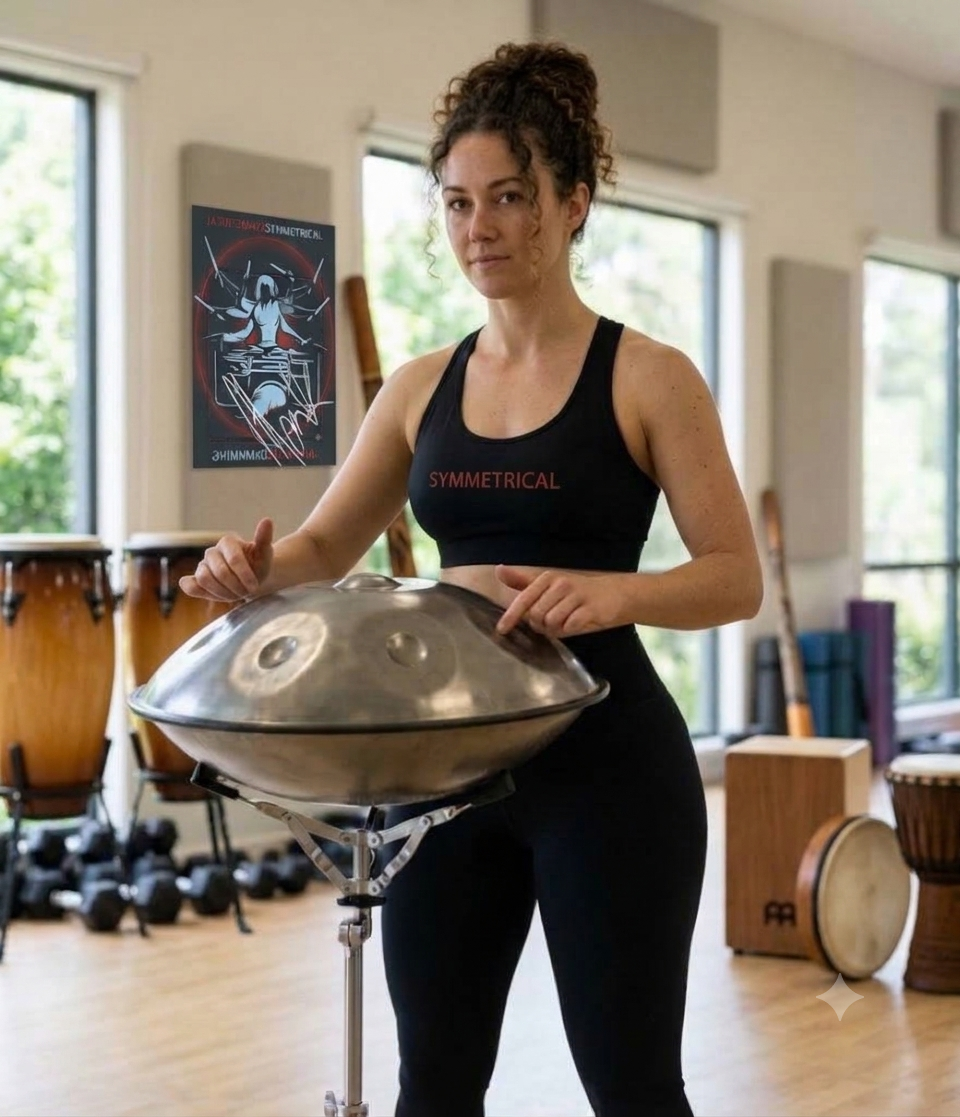
Because handpans are tuned to cohesive modal architectures (such as D Kurd), chord training centers on acoustic layout, overtone blooms, and simultaneous strikes:
- The Ding Anchor: Strike the central top note (Ding) to establish your steady fundamental drone.
- The Zig-Zag Layout: Notes alternate left-to-right ascending the shell. Standard triads span opposing sides of the instrument, teaching your ear to match spatial physical distance with harmonic tension.
- Dyad Harmonics: Strike two note-fields simultaneously to isolate overtone blooms (e.g., Major 3rds and 6ths for open warmth versus Minor 3rds and 7ths for introspective stillness).
Glockenspiel: Pitch Clarity & Keyboard Mapping
The glockenspiel provides absolute pitch definition across 2.5 octaves, though its high-frequency overtones require focused physical isolation:
- Managing Overtones: Steel bars produce strong secondary partials. Lightly damp the striking bar with a softer mallet or fingertip to isolate the exact fundamental pitch.
- Keyboard Alignment: The lower row (naturals) and upper row (accidentals) mirror standard keyboard architecture. Train your ear to discern intervals between bare natural triads and rich accidental color tones.
- Two-Mallet Dyads: Practice simultaneous two-note strikes (e.g., Perfect 5ths for pure, crystalline stability versus Tritones for piercing, unresolved friction).
3. Systematic 10-Minute Daily Practice Routine
Consistent micro-sessions bypass academic burnout and reinforce reflex-level harmonic intuition:
Time Slot |
Module |
Target Focus |
|---|---|---|
00:00 – 02:00 |
Root Tracking |
Hum exclusively the lowest bass note of randomized chords |
02:00 – 05:00 |
Quality Drills |
High-tempo contrast drills on chord types (e.g., Maj7 vs. Dom7) |
05:00 – 08:00 |
Real-World Application |
Transcribe 2–3 chord changes from a favorite track by ear |
08:00 – 10:00 |
Instrument Verification |
Vocalize a target chord quality, then voice it on your instrument |
4. Curated Tools & Recommended Media
Software & Interactive Platforms
- Functional Ear Trainer – Dedicated training based on Alain Benbassat's method of tonal center recognition.
- ToneGym – Gamified ear training covering interval recognition, chord qualities, and spatial balance.
- Musictheory.net Ear Exercises – Focused, modular drills for chord building and identification.
Video Guides & Conceptual Deep Dives
- Adam Neely: How to hear chord progressions – Functional bass-line interrogation and contextual hearing.
- 12tone: Ear Training Basics – Foundational breakdown of modern interval and chord perception.
- Signals Music Studio: The Secret to Hearing Chord Qualities – Practical guide to feeling harmonic color over dry formulas.
- Handpan tutorial: 5 Ways to play chords – Spatial voicing strategies and dyad grips on tuned steel.
- Tuned Percussion Reading & Playing Skills – Mallet articulation, dampening, and overtone control for keyboard percussion.
Learn more:
https://SymmetricalDrummingAustralia.org