Physics and Biomechanics of Bass Drum Rebound
Understanding the mechanics of bass drum speed, precision, and beater rebound requires analysing how mechanical engineering, external forces, and human anatomy converge.
Far from being random or dependent on "secret genius," kick pedal operation is a unified, geometrically predictable system.
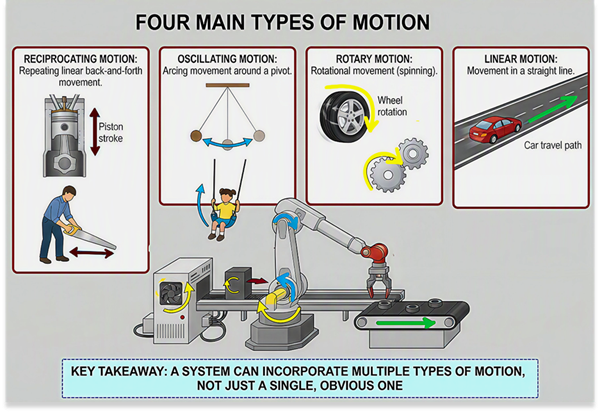
1. The Three States of Motion
Every stroke converts physical input into output across three mechanical phases:
-
Reciprocating Linear Motion: The downward vertical push delivered by the drummer's leg and foot onto the footboard.
-
Partial Rotary Motion: The conversion of that vertical push into a turning force as the chain or strap rotates the axle and offset cam (45 to 90 degrees).
-
Effective Reciprocating (Membranic Oscillation) Motion: The final horizontal striking action where the beater oscillates back and forth against the vibrating drum skin.
2. The Four "Springs" of the Pedal System
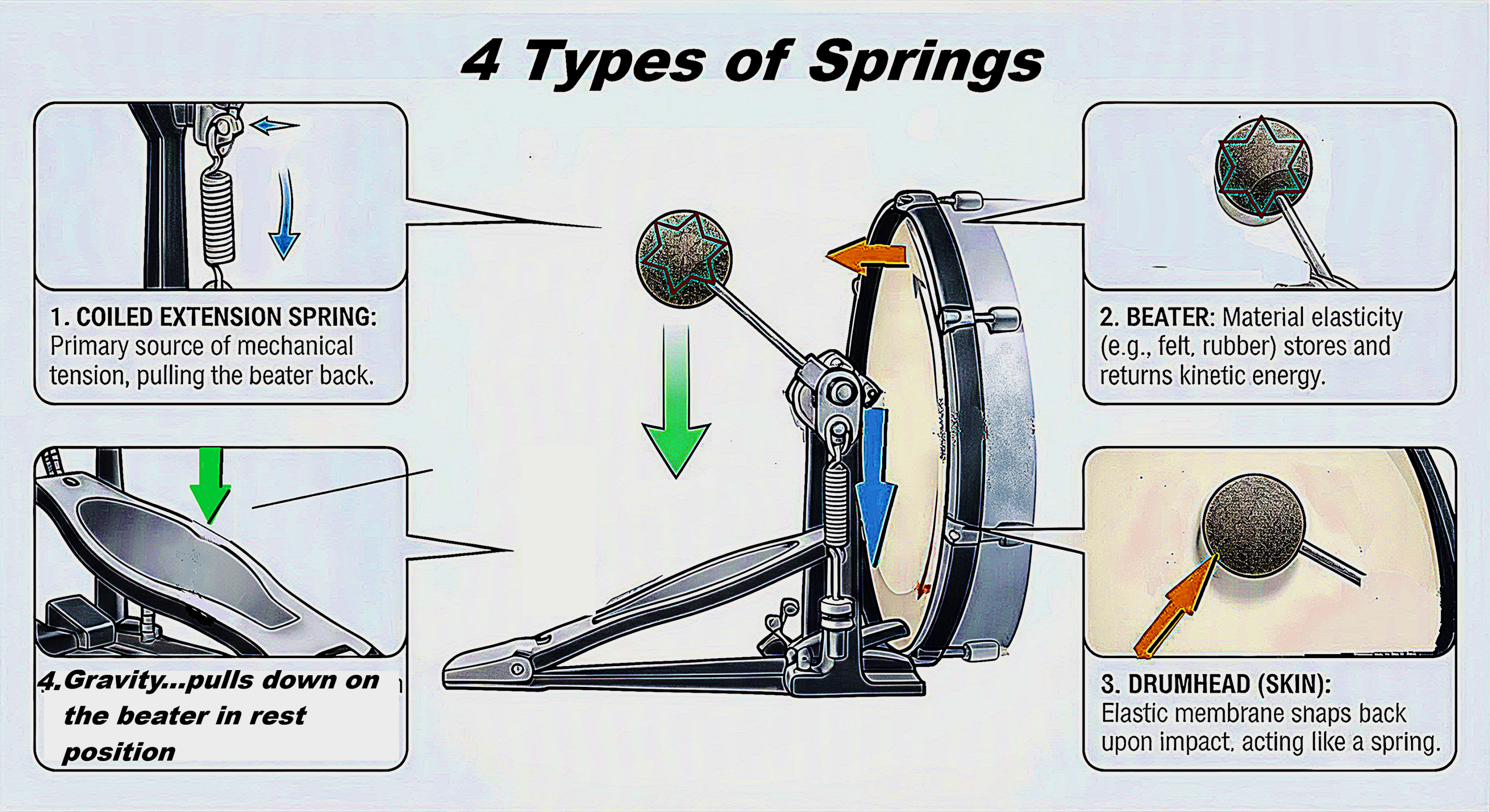
The return recovery is not driven by the extension spring alone; rather, it is a multi-source kinetic loop powered by four distinct "spring" elements working in harmony:
-
The Coiled Extension Spring: Provides the primary mechanical tension on the rocker arm.
-
Gravity: Assists the return stroke, particularly as the footboard and beater approach their resting home position.
-
The Drumhead (Skin): Acts as an elastic membrane that snaps back upon impact, pushing the beater away.
- The Beater: Stores and returns kinetic energy through its own material elasticity (such as spherical compressed felt or high-elasticity rubber).
3. Spring Physics, Cams, and the Skin ‘Trampoline’ (Synchronisation)
-
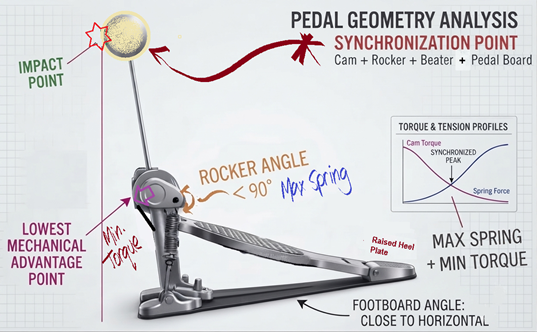
Spring Non-Linearity: Extension springs stretch exponentially as the rocker arm turns, creating a back-heavy resistance profile at high tensions. Long duration.
-
Cam Compensation: Lobed, non-linear offset cams feature a nose that drops away near impact. This reduces torque while gearing up the drive ratio, dramatically increasing beater speed into the head. Non-linear always changing.
-
The Trampoline: The most powerful spring effect (proportional to head tension) but very short duration.
-
Synchronisation: To eliminate lumpy feel and uneven motion, the three parameters must synchronize perfectly at the drumskin!
Peak spring stretch, minimum cam radius, and impact point!. Must line up perfectly in an efficient intuitive pedal!
4. Human Biomechanics: Lower-Leg Anatomy and Ergonomics
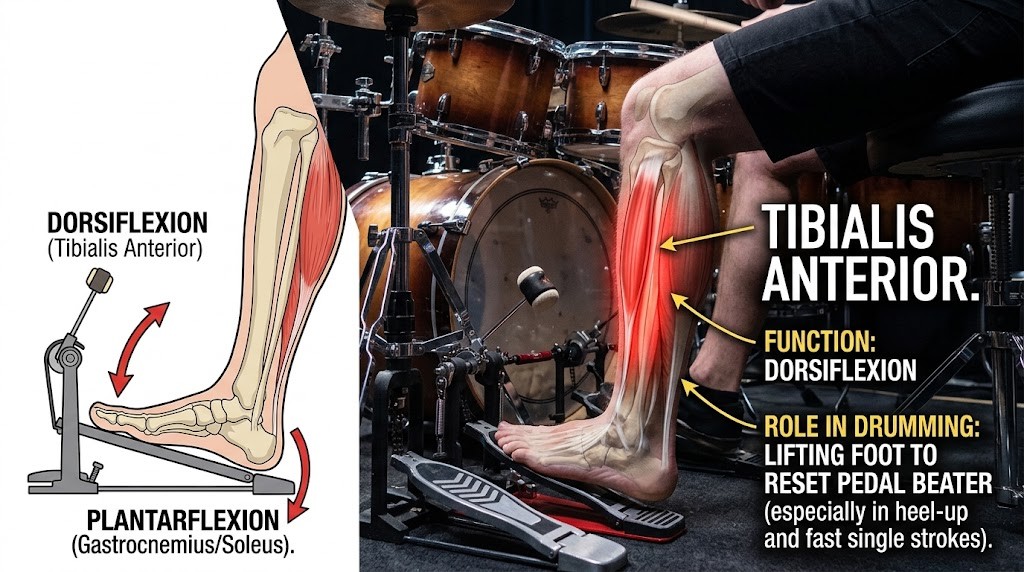
Pedal board height and length dictate the mechanical advantage generated at the ball of the foot. Efficient ankle and foot speed relies on an alternating activation pattern between specific lower-leg muscle groups:
-
Calf Muscles (Plantar flexors): Primarily driven by the gastrocnemius and the deeper soleus muscles, which push the foot downward on the pedal board
-
Shin Muscles (Dorsiflexors): Anchored by the tibialis anterior, which pulls the foot upward and controls the recovery stroke.
When the pedal board is positioned closer to horizontal at impact, it optimizes this muscle synergy, turning the body and pedal into a unified, geometrically predictable, and sympathetic mechanical system.
External References & Authoritative Reading
-
Pedal Mechanics & Hardware Engineering: Modern Drummer's guide on Bass Drum Pedals and Redison's breakdown of Bass Drum Pedal Anatomy.
-
Biomechanics, Ergonomics & Setup Optimization: Brandon Green’s Drum Mechanics platform and educational frameworks focused on postural ergonomics, motion efficiency, and sustainable performance.
-
Anatomy of Lower Leg Muscles: Cleveland Clinic's detailed medical overview of the Calf Muscle Anatomy and Function.
-
Kinematics & Technique Application: Technical insights into alternating lower-leg muscle activation during fast footwork can be explored via resources like Scientific Proof Of How Ankle Technique Works.