Improved Time by engaging the Parasympathetic Nervous System (via the Vagus Nerve).
Stepping backstage before a high-stakes performance often triggers a surge of adrenaline, shifting brain activity into the amygdala (the survival-driven fight-or-flight centre). For a drummer, an overactive amygdala spells disaster: it spikes your heart rate, creates micro-tension in your forearms and ankles, and distorts your internal clock.
Shifting from this survival state into a focused, calm, analytical state requires engaging the parasympathetic nervous system via the vagus nerve. By combining targeted somatic techniques, you can manually override stress signals, relax your limbs, and lock in a rock-solid groove all night.
The Biological Mechanism: The Vagus Nerve
The vagus nerve is the main highway of the parasympathetic nervous system, stretching from the brainstem down through the neck, chest, and abdomen. When stimulated, it acts as a physiological brake—slowing your heart rate, quieting the amygdala, and clearing mental clutter so your prefrontal cortex can take over.
The Pre-Gig Centering Protocol
Execute this sequence 15 minutes before hitting the stage to transition into peak performance flow:
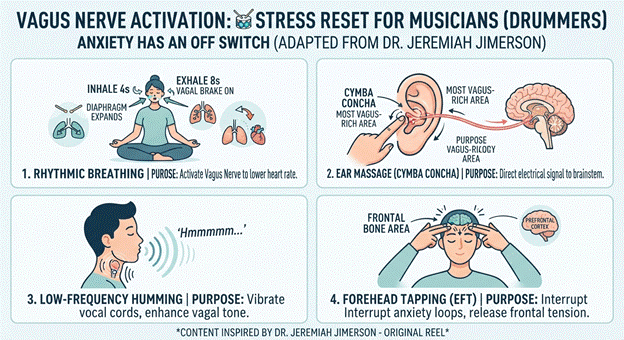
1. Rhythmic Breathing (The Extended Exhale)
-
The Process: Sit upright, inhale smoothly through your nose into your diaphragm for 4 seconds, and exhale slowly through pursed lips for 6 to 8 seconds.
-
The Impact: Prolonged exhales stimulate vagal output to the heart, immediately lowering blood pressure and signalling your nervous system that you are safe.
2. Rubbing the Pinna and Cymba Concha
-
The Process: Locate the cymba concha—the deep, upper hollow of your outer ear directly above the ear canal. Place your index finger here and apply gentle, firm pressure while massaging in slow circular motions (40 to 60 circles per ear).
-
The Impact: The outer ear (specifically the cymba concha) contains a dense concentration of the auricular branch of the vagus nerve (Arnold’s nerve). Mechanical pressure here sends a direct electrical signal to the brainstem, rapidly down-regulating anxiety and sharpening mental alertness.
3. Low-Frequency Humming
-
The Process: Take a deep breath and, on the long exhale, hum a steady, low-pitched "Mmmmmm" note. Feel the physical vibration buzzing through your throat, jaw, and chest.
-
The Impact: The vagus nerve runs directly past your vocal cords. The physical resonance of humming acts as an internal acoustic massage for the nerve, instantly enhancing vagal tone.
4. Forehead and Somatic Tapping
-
The Process: Lightly tap with your fingertips across your forehead (the frontal bone region) and between your eyebrows while maintaining slow breaths or a low hum.
-
The Impact: Gentle rhythmic tapping interrupts cyclical performance anxiety loops in the prefrontal cortex, bringing your awareness back out of your head and into somatic, body-centered presence.
Applying It to the Drum Kit: Rock-Solid Timing All Night
When these techniques are chained together backstage, the physiological transformation directly translates behind the kit:
Eliminating Muscle Interference:
- Panic causes hidden muscular tension—stiff wrists, rigid shoulders, and tight ankles fighting the bass drum pedal. Vagus nerve activation releases this hyper-tonicity, allowing your muscles to move with fluid, relaxed mechanics.
Unlocking Myelinated Motor Memory:
- When your amygdala is quiet, your analytical brain steps aside and lets deep, well-practiced motor patterns take over. Your limbs execute stick heights, paradiddles, and pedal strokes with precise consistency.
The Steady Internal Clock:
- A calm nervous system eliminates internal time-distortion (where adrenaline makes you rush tempos). With your vagus nerve engaged, your internal tempo remains anchored, allowing you to lay down an immovable groove from the first downbeat to the final encore.
Would you like to explore a structured warm-up routine that combines these somatic resets with limb-independence exercises right before you sit at the kit?
Go to Symmetrical Drumming Australia for much more.