Is It Hard to Learn the Bodhrán?
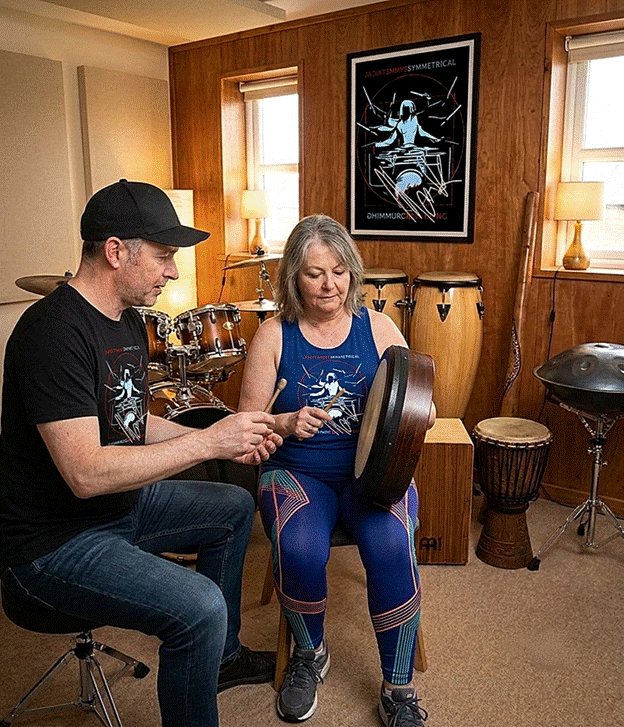
Wonderfully Acessible
At its core, the bodhrán (the traditional Irish frame drum) is wonderfully accessible.
Beginners can quickly pick up a basic steady beat using a double-ended tipper (brush or beater) and start accompanying tunes. However, transitioning from a simple foundational pulse to a professional modern playing style reveals a distinct technical curve.
1. The Core Challenge: Modern Stick Manoeuvres
Traditional playing often relied on a straightforward up-and-down stroke (the basic Kerry style). Modern bodhrán playing, pioneered by masters over recent decades, incorporates intricate stick control patterns:
-
The Triplet (The Reel Stroke): Utilizing both ends of the tipper to produce rapid, articulated subdivisions of the beat (down-up-down).
-
Cross-Rhythms and Accentuation: Shifting accents dynamically across the measure rather than just locking into a rigid downbeat.
2. Left-Hand Pitch and Tone Manipulation
What truly separates a beginner from an advanced player is the left hand (for right-handed players):
-
Internal Pressure Technique: Pressing the palm or fingertips against the inside goatskin head alters the tension and pitch of the drum in real-time.
-
Melodic Integration: Advanced players use left-hand pressure changes to match the modal notes and drone tones of the accompanying fiddles, flutes, or pipes, effectively turning the drum into a melodic percussion instrument.
Why Mastering the Technique Is Worth the Work
While mastering these advanced stick manoeuvres and hand-pressure techniques requires dedicated practice and patience, the payoff is immense:
-
Dynamic Versatility: You move from merely keeping time to actively driving and shaping the traditional session or performance.
-
Enhanced Coordination: The independence required between your right wrist (tipper articulation) and left hand (head damping/pitching) builds exceptional neuromuscular control applicable to any percussion discipline.
Learn More