WTF is Lesson 25?
Its about those esoteric things called rudiments!
RUDIMENTS….The alphabet/ phrasebook of snare drumming
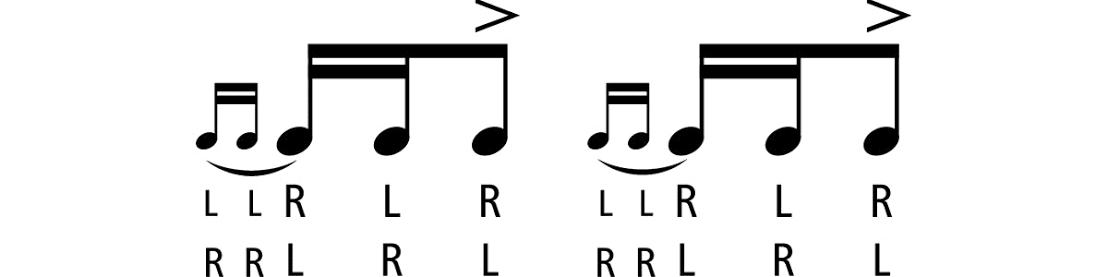
William F. Ludwig, Of the Ludwig drum company, (think Ringo Starr's DrumKit) called the drum rudiment Lesson 25 the "Ratatap" in 1942. Now that makes good sense Mr Ludwig! Though it does look like Rattrap at first reading…read on because I can fix that!
Mnemonics
RrataTAP (roll the Rr)
The name was an onomatopoeic invention intended to describe the sound of the rudiment, though it did NOT enter the Drumming lexicon. Which is a pity…Ludwigs suggestion with a rolled Rr works well. I recommend adding capitals for the last syllable TAP…RrataTAP. Now that makes it useful, memorable, and far more teachable than the ‘smug’ Lesson 25!
Key Facts About the RrataTAP-25
Structure:
It consists of a drag followed by two alternating single strokes (a three-note figure), typically with an accent on the final note. See diagram/notation above.
Sticking:
If starting with the right hand, the sticking is
(ll) R L R
(where "ll" is the left-hand drag).
If starting with the left, it is
(rr) L R L.
Origin of “Lesson 25”
The name comes from its position as the 25th lesson in Gardner A. Strube’s 1869 book,
‘Drum and Fife Instructor’…
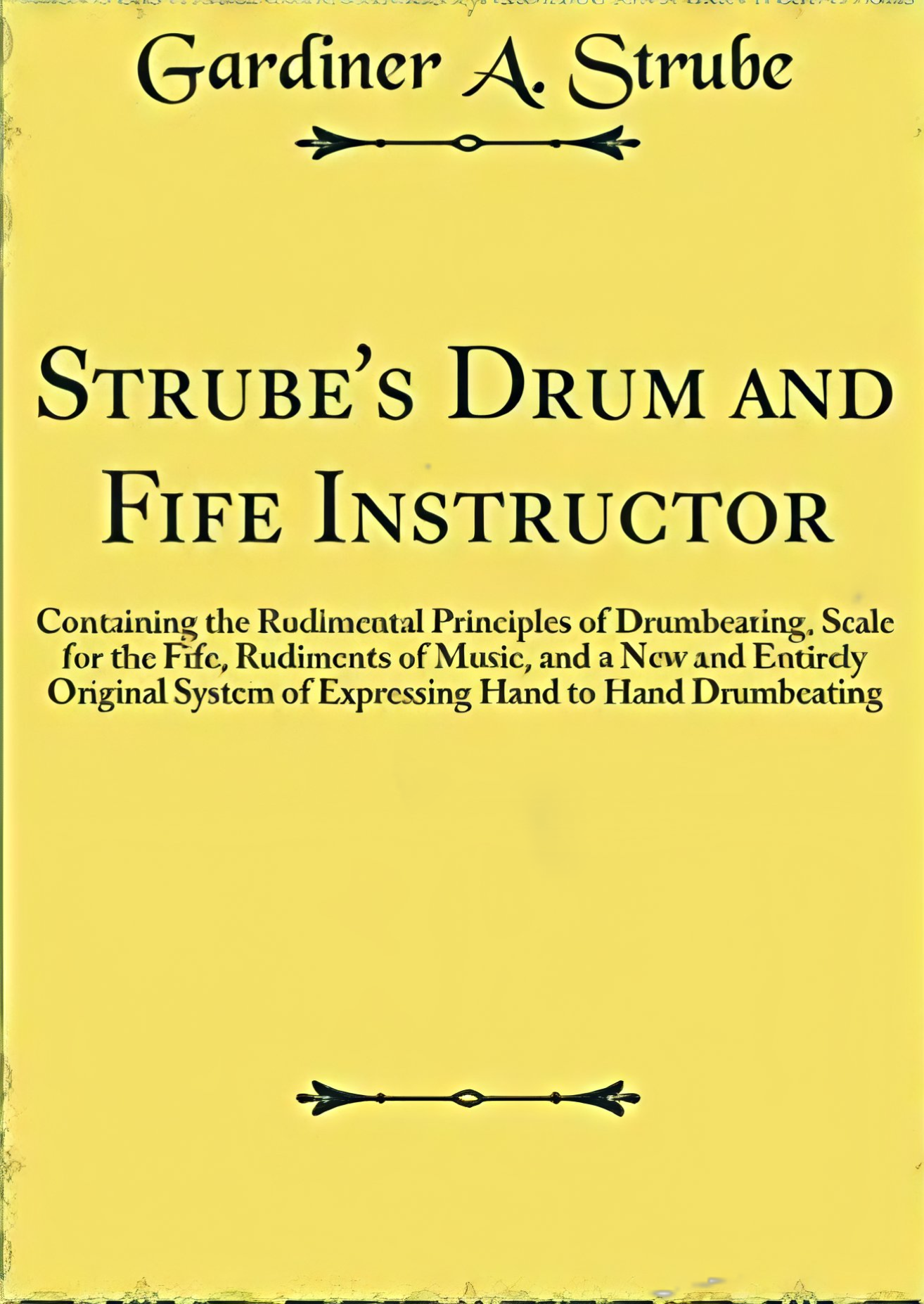
‘DrumBeating’ 150 years ago
Gardiner A. Strube wrote his drumming book, Strube's Drum and Fife Instructor, in the United States.
The book was copyrighted/published in 1869 (often cited with a 1870 publication date).
Context:
Strube, a former drummer in the 5th New York Volunteer Infantry (Duryee's Zouaves) during the Civil War, was serving as the Drum Major for the Twelfth Regiment, N.G.S.N.Y. when he wrote it.
Significance:
It was approved by Secretary of War John A. Rawlins in 1869 for use in the U.S. Army.
The book is famously known for establishing 25 lessons (rudiments) that served as a foundation for the 26 Standard American Drum Rudiments later adopted by the National Association of Rudimental Drummers (NARD).
Lesson 25 - A Rudiment of many names which have not ‘stuck’
Throughout history, it has also been called the
- Quickscotch,
- Compound Stroke,
- Accent Number Three
RrataTAP….Is yet to enter the lexicon…heres hoping!
Two notes at the core
The RrataTAP is a rhythm based on groups of two…its an ornamented pair of Quavers with a drag pickup and semi-quaver ghost note between those two quavers. Its a 2 beat scaffold with extras.
Is the RrataTAP a Herta?
Lesson 25, The Rratatap is broadly similar to the Herta in sticking...but with one huge difference!
The herta is a 3 beat 'lick'...the Ratatap is a 2 beat lick..
The RrataTAP will loop with a single 4 beat bar…the Herta will not!
Who TF is Herta?
German Origin:
The term "Herta" appears to have originated in Germany in the late 19th century.
Etymology:
It is believed to be derived from the Germanic mythological figure Nerthus (a goddess of fertility/force), who was sometimes referred to as Herthus or Herta in 19th-century interpretations.
Why is it a Drum Term?
No one knows. Very disappontingly…Herta Hairta not to have any deepnroots.
Its not named after a specific person or historical figure in the drumming community or elsewhere.
The origin of the name comes down to the sound of the word…'HaiRrTa' ( roll that Rr).
Onomatopoeia
"Herta": It is often pronounced "hairta."
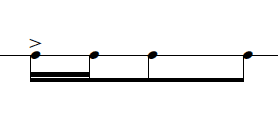
Rolling the "r" in the word hair gives it a two syllable sound...saying "hair-ta" roughly matches the rhythm of the stroke (rlr--L).
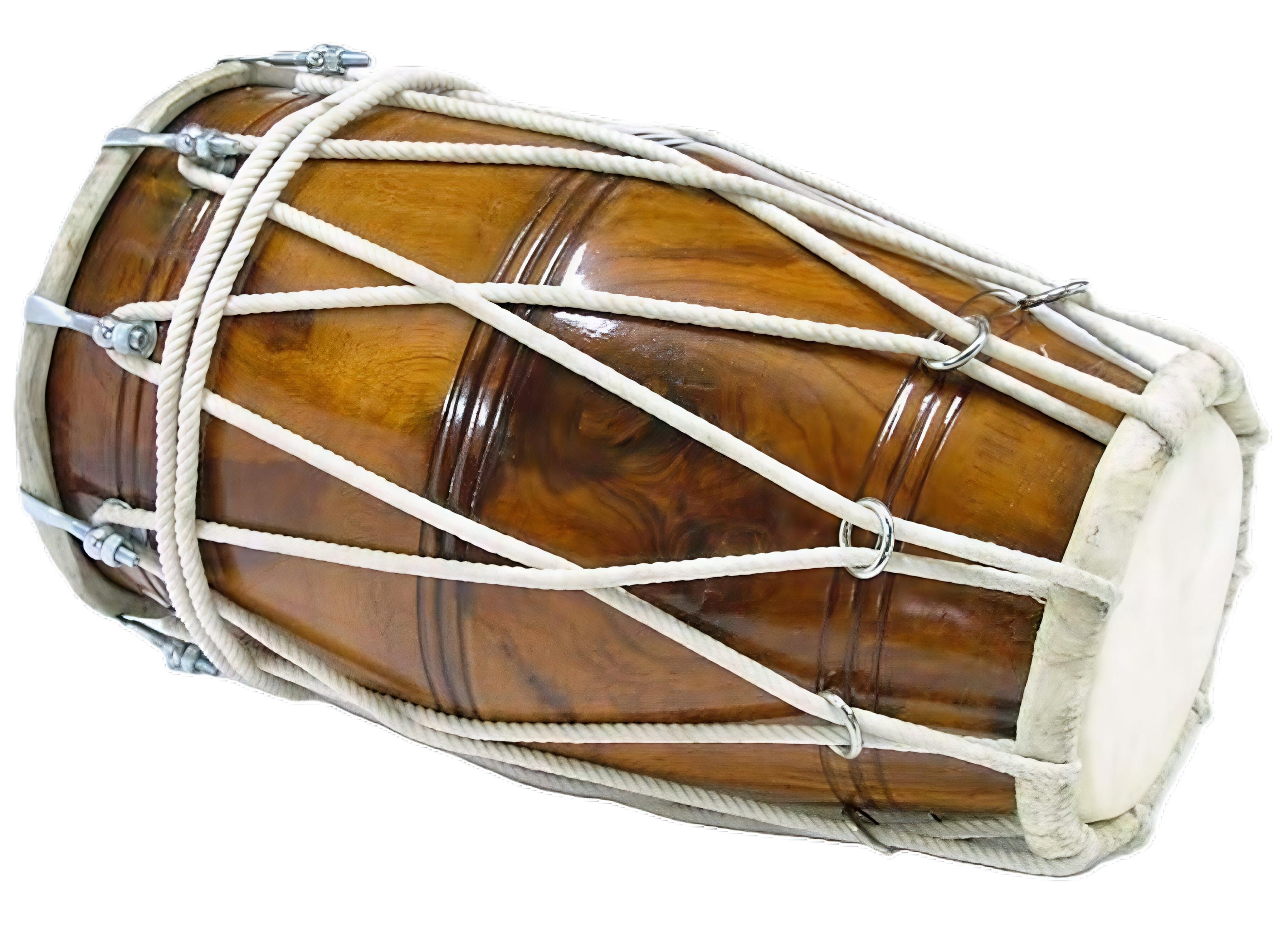
Dhoolika
I leant the Hairta as a Dhoolika!
Greg Sheehan taught me the Doolicka at the Bondi Rock n Roll workshops in 1989…Alongside Peter Winkler, and Tina Harris, at the iconic Bondi Pavillion in Sydney Australia.
The Herta and the Doolika (often spelled Dhoolika) are both fast, triple-based rhythmic patterns primarily used in drumming and percussion.
While the Herta is a staple in Western marching and kit drumming, the Dhoolika is a traditional rhythm associated with Indian folk percussion, specifically the Dhol.
Again the name Doolicka mimics the sound and helps the player remember and ariculate the rhythm!
Popularity:
The Herta became a staple in modern drum kits (famously used by drummers like Dave Grohl and in bands like Meshuggah) to create complex, syncopated, or aggressive sounds that feel both triplet-based and linear.
Tomas Haake is the longtime drummer for the Swedish extreme metal band Meshuggah, having joined the band in 1990. Renowned for his technical ability, polyrhythmic, and complex, machine-like drumming, he is considered one of the most influential drummers in modern metal
Common Variations
3-Note Herta:
Two fast notes, then one slower (e.g., 32nd, 32nd, 16th)…better swapping the lead hand!
4-Note Herta:
The standard 32nd, 32nd, 16th, 16th (RLR-L).
Foot Herta:
Used by drummers like Steve Gadd for "bucket" fills (using the kick drum).
A "bucket of fish" drum fill is a common, 4-note, high-speed rhythmic pattern often used in rock music, famously associated with drummers like John Bonham.
It consists of a sequence (usually right-left-right-kick) played across the snare, high tom, and floor tom, ending with a kick drum and a crash cymbal.
Rhythmic Feel:
It is often described as a "singles drag" or "single-stroke drag" because the first two notes are played very fast, acting as a "drag" or "grace note" into the subsequent two notes. It is a 3 'beat' lick.
The herta works best as a rhythmic if it is repeated. To articulate its 3 beat structure across a four beat pulse.
It has a three beat matrix under it...1+,2 ,3 ...itts an ornamented dotted note! Be it a critchet Quaver or Semi- Quaver. In stright feels it creates an ambiguous ' tempo' effect as it advances across the pulse and bar lines at 1.5 speed
Versatility:
IT is most often explained from a sticking point of view and the dotted 3 against 4 feel is simply assumed.
This assumption ignores that the Herta lick uses 3 beats as its matrix. Very important¡
In triplet grooves its fits right over the sub groups in triplets...the three inherent in trplet feels. Its a Herta in name only.
In straight grooves it walks across the pulse and the bar line at 1.5 tempo. And stands out!
Getting the feel first ( Not the sticking)
Those dotted notes
The preliminary exercise required before to getting the herta to work is to practice dotted note spacings against a straight 4 or 8 or 16 pulse.
Playing the dotted note tree...
Dotted notes have their own ‘ tree’ …and this is often overlooked.
Dotted minums [accents on 1, 4, 3, 2 over 3 bars]... then dotted crotchets [accents on 1, + of 2, 4 etc rolling over 3 bars (notice hoe those dotted minum counts are nested in there too)]...and then the dotted quavers, and semi- quavers. Then replace that rolling accent with a double time double stoke.
The link to a Perfect 4th in Harmony
Hertas have an inherent half time 3 against 4 feel as the roll over the bar line using dotted note feel....in effect its the rhyhmic equivalent of a Perfect 4th dyad...at a ratio of Root to 4th of 3 to 4...
Dotted notes are 'rhythmic' 4ths!
3 against 4 in Harmony and Rhythm
A perfect 4th works against the root note as a dotted note works against the straight pulse.
Straight feels , of 4, 8, 16, 32...are rhythmically equivalent to Octaves...
Triplets, BTW...are rhythmic 5ths!
In conclusion.
Lesson 25, is best called a RrataTAP with rolled Rrs. This helps audiation and memory. That Onomatopoeiac mnemonic really helps¡
The RrataTAP is not a Herta.
Confusion between RrataTAP and Herta come from the way they are spoken about and conceived of…ie: in Snare drum rudiment lingo!
Focusing on the sticking and the ‘ look'..thats where the blurred interpretation arises.
Herta is an Onomatopoeiaic 3 beat (dotted ot 1 and a half)) pattern
Herta is most effective in its ability to ' create a dual pulse and rythmic ambiguity' ...bringing in rhythmic tension which resoves back to rhythmic home base at the end of a sequence.
At Symmetrical drumming Australia you will learn herta as an ornament to cycled dotted feels...after getting those dots well and truly internalised and playing across the pulse and bar line...Herta come after that!
Those rhythmic '4ths' come first at Symmetrical Drumming Oz!!! The herta and the buckets of variations fall into place after that!
Dhoolika Beyond the Drum!
Herta, Dhoolika, and indeed any Drum Rudiments…can be applied to any instrument and any context.
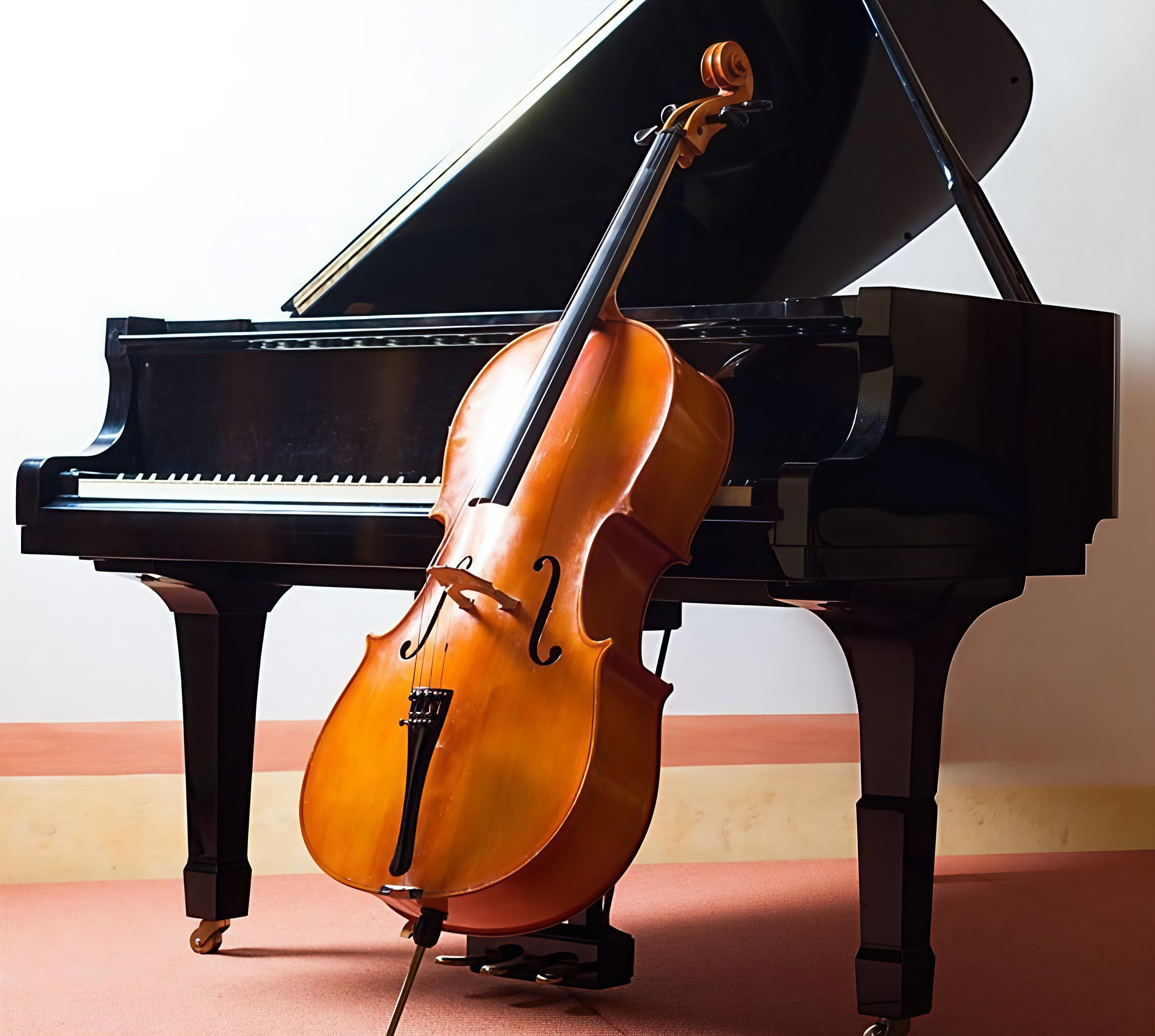
And…here is one of my original compostions based on a ‘Herta’ shared between a Piano and a cello!
Celliano
https://www.reverbnation.com/MarcusCampbellorum/song/34603254-celliano
Click the pic to hear ‘Hairta’ applied to instruments which are NOT drums!
Seeya
Mark
Mark Campbell Symmetrical Drumming Australia
https://symmetricaldrummingaustralia.org
@markcampbelldrummer